Righteous in Christ

no-diy

Philippians 3:8-9 “I consider everything a loss compared to the surpassing greatness of knowing Christ Jesus my Lord, for whose sake I have lost all things. I consider them rubbish that I may gain Christ, and be found in him, not having a righteousness of my own that comes from the law, but that which is through faith in Christ–the righteousness that comes from God and is by faith.”

My father is the quintessential “do-it-yourselfer.” I remember going for a walk with him once and meeting one of our neighbors for the first time. As my father tried to describe to him who we were and where in the neighborhood we lived, the man remarked, “I know who you are. You’re that guy who always has the piles of dirt, sand, or gravel in your yard.” He was right. There was always a project going on at our house.

When it comes to home improvement, there is nothing wrong with being a “do-it-yourselfer.” If you are any good at it, you can make sure things get done the right way. The same holds true for many other areas of life. Maybe you can sew your own dresses, or grow your own food, or manage all your own investments, or fix all your own cars, and make sure it gets done the right way.

But there is one area of life for which this never works, and that is in our relationship with God. Here we are all tempted to believe that we have to do it ourselves. But as long as we are trying to do it ourselves, we will never be sure where we stand with God.

The true Christian faith is not a moral philosophy about how we must live. It is “knowing Christ Jesus my Lord.” It is not just studying about Jesus like studying about some historic figure in a book. It is actually meeting Jesus in his word, being introduced to him, and living life with him as our Savior, our friend, and our brother.

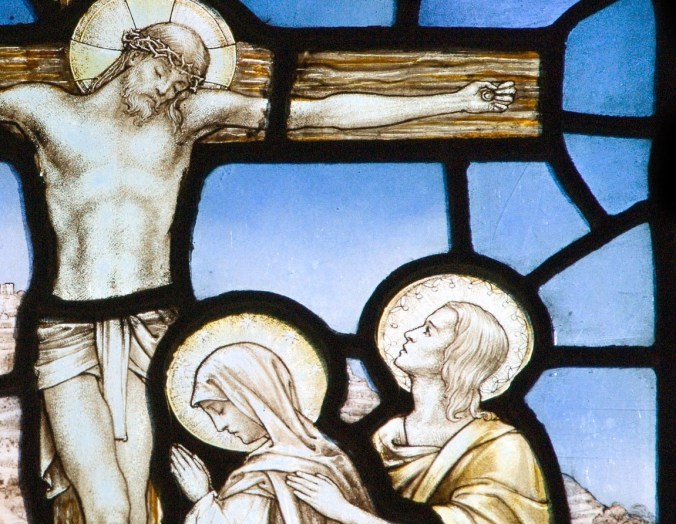
When we know Jesus, then we truly know God. When you sit down on the hillside and listen to Jesus preach his sermon on the mount, then you see how high God has set his standards for keeping his law, and how far short of his perfection we have fallen. But when you follow him down from the hillside, and you see him actually reach out and touch the unclean leper to heal him, you know the depth of his concern for your suffering, and the extent of his power to fill your needs. When you stand with Jesus at the tomb of Lazarus, and you see the tears burning down his cheeks, and you hear his voice commanding Lazarus back to life, you know the intensity with which he feels your pain, and the authority with which he controls your world. When you kneel at the foot of his cross, and the blood running from his hands and feet carries his life mingled with your sins away past your knees, and his dying breath cries out, “It is finished,” you know that in his unsurpassed love for you he has left nothing more for you to pay or do.

Do you want to be sure, really sure, that God’s love and grace are yours, that your sins are forgiven, that you will live again after you die? Then you need to be found in Jesus, wrapped in the righteousness of his holy life, cleansed in the blood of his innocent death. A righteousness of our own that comes from our own keeping of the law is only a so-called righteousness. We never live our lives completely guilt free, and as long as we are still producing sin, we aren’t righteous at all.

Then God comes and gives us a righteousness of his own making. He gives us an innocence that comes to us from the outside. He takes and he hides our sinful selves in the perfect love of Christ. He so covers over the content of our lives with Jesus’ life and death that he can no longer see us at all. We are all little Christ’s to him. Lutheran Christians celebrate this truth in the Reformation this time of year. A more well-known October celebration will see little children walking door-to-door with hidden identities, hidden behind costumes and masks. By bringing us to faith, the Lord has dressed each one of us up as Jesus, only our new identity is more than a flimsy costume, and we wear it every day for the rest of our believing lives.

This is our great find, not only to find and know Jesus, but to be found in him with the righteousness that comes from God. In Jesus we are the precious, holy, dear, innocent children of God himself.

A Church Worth Imitating

one

Acts 4:32 “All the believers were one in heart and mind.”

It’s no secret that Christianity often looks disunited today. We are divided into so many different denominations–over 30,000 of them by the last count I heard. In Lutheranism alone there are over 25 different flavors, and attempts to get them together only seem to create more divisions. If you pay any attention to the news, you know that inside each church body there are often heated debates about teachings and morals. They go to their national conventions and fight about what the Bible really says about human sexuality or how the church should be governed. Some churches claim to be “non-denominational” and try to stay above the fray, but isn’t that really a way of saying we can’t get close to anyone but ourselves?

If you have been part of a local congregation, you know that they have issues, too. Sometimes they will divide over issues ranging from key Bible teachings to what color to paint the Sunday school classrooms.

Not the church in Jerusalem. “All the believers were one in heart and in mind.” Notice the key to their unity: one in heart, one in mind. This wasn’t an oversized club where everyone shared a common hobby. They were one in heart. They had the same heart, because they had the same faith. Each of them trusted in Jesus as Savior from sin. When trust in Jesus as your Savior from sin fills your heart, you don’t live with delusions of greatness and superiority. You are a sinner who has been rescued from the death and hell you deserved by Jesus’ forgiving grace and supreme sacrifice at the cross. What do we have to be proud of in this? But being so humbled, believing that you have been so loved by God that you owe him everything, has a very desirable effect on those who believe it is true. Love begins to grow. Love has been called “the great commandment,” but love isn’t just a rule we keep. Taking a picture from Jesus, it is like a fruit that grows out of us because we are attached to him by faith. It’s spontaneous. It just happens. Together, faith and love made this congregation in Jerusalem “one in heart.”

But there was more to the secret of their unity. They were also “one in mind.” They had more than a nice feeling about each other. They believed the same things. Go back two chapters in Acts and we see that they put a high priority on learning the truths of the Christian faith. “They devoted themselves to the apostle’s teaching.” “Every day they continued to meet together in the temple courts.” When people share the same set of beliefs, what is there to disagree about? Everyone was on the same page. Hearts and minds made one by faith, love, and good teaching gave this congregation a genuine peace and unity. It made them a pleasant community attractive to outsiders and able to work together to get God’s work done.

Can our churches be like that? Can we repent of our bad priorities, and let hearing and learning God’s word rise to the top of the list, so that it can grow our faith, and form our hearts into one heart? Can we set aside phrases like, “Well, I think…,” or “Everybody knows…,” and let the truths of the Bible form our opinions for us, so that we share the mind of Christ, and our way of thinking is united in him? People will probably think we are crazy if we do. This church in Jerusalem received its share of grief from the main religious leaders and general culture around them. Like Jesus, they were rowing upstream, swimming against the tide. But the greater blessings of unity make this a church worth imitating.

Picture By Tony Hisgett from Birmingham, UK - oneUploaded by tm, CC BY 2.0, 
https://commons.wikimedia.org/w/index.php?curid=27908791

God Has Come to Help His People

celebrate

Luke 7:16 “They were all filled with awe and praised God. ‘A great prophet has appeared among us,’ they said. ‘God has come to help his people.’”

Do you sometimes feel as though your faith has become passionless? You haven’t stopped believing, but your beliefs have become so much a part of your everyday life that they almost seem commonplace. They don’t inspire much excitement anymore. Perhaps you have even worried that you are beginning to take your faith and your Savior for granted, and you are slipping into complacency.

Then you could envy these people being filled with a sense of holy awe and spontaneously praising God here. Of course, if we had just seen a dead person sit up and start talking, we would all be a little excited and awe-struck, too. No wonder the news about Jesus spread around the country so quickly.

We don’t have less to be excited about. Every day Jesus forgives the sins that would otherwise keep us out of heaven and send us to hell. Isn’t that you and I receiving our lives back from the dead? That alone is all the reason we need to be filled with awe, praise God, and tell others. In fact, there is nothing more worth telling to others about what Jesus has done.

But as exciting and life-changing as this is, he does it for us everyday. Through no fault of our Savior, we can get so comfortable with it that it doesn’t seem special anymore. Maybe you can relate to the example a man once gave to one of our pastors. “Coming to our church,” he said, “was like a man dying of thirst crawling through the desert. Suddenly, over a sand dune, he sees an oasis, and he goes running down to the water, and he jumps in, and he yells and splashes around because he is so happy. But all around him are people who have lived at that oasis all their lives, and they look at him and say, ‘What? Are you nuts?’”

One of the blessings our Lord may bring into our lives by letting us suffer grief, and then coming to us with his comforts, and letting us find our help in his promises, and in his answers to our prayers, is this: he fixes our attention firmly on himself again. We don’t take him for granted anymore. We know that he is our life, our hope, our all. We can’t keep that to ourselves.Our hearts and mouths are filled with awe and praise.

An old professor at our seminary once wrote: “…children of God learn to know that God is nearest just at the moment when he seems to be farthest away. At the time when he seems to be most angry, when he sends them afflictions and trials, they know him best as their merciful Savior. When they feel the terrors of sin and death most deeply, then they know best that they have eternal righteousness. And just when they are of all men most miserable they know that they are lords over all things.” God isn’t missing when tragedy strikes. Look to his word and to his promises, look to Jesus, and you will know that God still comes to help his people.

Strong in Grace

strong

2 Timothy 2:1 You then, my son, be strong in the grace that is in Christ Jesus.

Little boys are in a hurry to get big and strong. When I was a little boy, telling me that eating certain vegetables or the crust around my piece of bread would make me strong was all the motivation I needed to clean that part of my plate. I couldn’t wait to get big and strong like dad, or grandpa, or one of my sports heroes.

As adults, we don’t want to be thought of as weak, either. Why? Our childhood idols aren’t our inspiration anymore. Rather, we don’t want to be an easy mark. We don’t want to be victimized. We want to be safe and secure.

The Apostle Paul wanted his young friend Timothy to be strong. This had nothing to do with his physical or psychological security. It wasn’t a matter of being like other Christians. He wasn’t trying to make Timothy into someone who would impress others.

What Paul wanted for Timothy was spiritual safety and security. He wanted him to be strong in his faith. With such spiritual strength, Timothy could overcome the temptation to give into sinful desires. He would be equipped to defend the truth about Jesus from attack. He would have the courage to share his faith with others.

Where would Timothy find such strength? Not in eating his vegetables, or following some spiritual training exercises. Paul says, “Be strong in the grace that is in Christ Jesus.”

Being strong in “grace” reminds us that we are not strong in ourselves. Grace is God’s undeserved love for us. The very fact that we need grace assumes that we are spiritually weak. Scripture goes even farther: we are dead in our sins. We have absolutely no spiritual strength of our own.

But God has loved us in spite of our total lack of strength. What would you give for something that was already dead? You may not even accept someone’s money to take it off their hands. They couldn’t even pay you to take it. Our God, on the other hand, paid the highest price ever paid for anything when he gave the life of his Son Christ Jesus to have us, dead and powerless as we were. That is undeserved love! That is grace.

And that gives the power of new spiritual life to those who know and trust that grace. If God loves me like that, my life is filled with new possibilities and new capabilities. I can be content even when I have very little (Philippians 4:12-13), be happy even when I suffer (2 Corinthians 12:9-10), say “No” to temptation (Titus 2:11-12), find God’s help in every need (Hebrews 4:16), and generally love everyone, even my enemies (Romans 12:19-20).

That is the strength that does not come from ourselves, but from the grace that is in Christ Jesus.

God Is Greater

heart-in-hands

1 John 3:18-20 “Dear children, let us not love with words or tongue but with actions and in truth. This, then, is how we know that we belong to the truth, and how we set our hearts at rest in his presence whenever our hearts condemn us. For God is greater than our hearts, and he knows all things”

John is not saying that God does not want our words. Jesus said that out of the overflow of the heart, the mouth speaks. That’s not a hard picture to understand, is it? God’s grace and love come pouring into our hearts. And like water filling up a pitcher they come spilling back out of our mouths. We can’t help praying. We can’t help telling others. We can’t help worshiping. The words have to go somewhere.

But love is something more than words. “Let us love with actions and in truth.” “Do you really want to thank me?” our Lord asks. “Then why don’t you take care of each other. See that man over there, the one who looks a little shabby? Why don’t you feed him? Do you see that single mom who is struggling with her kids? Why don’t you give her a hand? Do you see that young person who just moved here, who looks alone and uncertain? Why don’t you go be his friend? Do you see that family that just lost their dad? Why don’t you give them a call, help with the lawn or the car, bring them a meal? Do you see those children I gave you to raise? Why don’t you turn off the TV, show some interest, spend some time together, help them with their homework?”

We have a thousand excuses for stopping short of putting love into action. I was busy with other things. It wasn’t convenient. I had other plans. I don’t have the willpower I need. I’m not very good at it. I wasn’t sure what to do. It costs too much. I have my own issues to deal with. I forget. I don’t get anything out of it. And much of the time, it just isn’t appealing. We just don’t want to. Love is a struggle for us, if we want to tell the truth.

But God sets our hearts at rest when our lack of love unsettles them: “This, then, is how we know that we belong to the truth, and how we set our hearts at rest in his presence whenever our hearts condemn us. For God is greater than our hearts, and he knows all things.”

God is greater than our hearts. Our hearts may be unsteady and undependable. Our love may run hot and cold. Thankfully our God is not that way.

His love doesn’t turn off when ours isn’t working. His heart continues to turn out acts of love, one after another after another, without considering our behavior first. Paul says it this way in Romans 5, “You see, at just the right time, when we were still powerless, Christ died for the ungodly. Very rarely will anyone die for a righteous man, though for a good man someone might possibly dare to die. But God demonstrates his own love for us in this: While we were still sinners, Christ died for us.” God is greater than our hearts because his love for us never fails. It never ends, it works even harder when we have been bad, and that is a truth that can set our hearts at rest.

Since God is greater than our hearts, he knows our hearts better than we do. As John says, “He knows all things.” When I look at myself, I see a bundle of contradictions. I can be kind and selfish just moments apart. No wonder Jesus warns us about judging others. When I look at my own life, it is hard to judge myself with any accuracy! But God has a window into our hearts that is superior to our own. By faith he already lives there himself. He isn’t distracted by what happens on the outside. He knows his own address. Sometimes I get lost trying to find someone else’s house. But I know where I live, and I certainly know my own house when I am sitting inside of it. God knows we belong to him, he knows our hearts belong to him, because he has made them his home, and he himself is sitting inside.

Set your hearts at rest, then. You can trust the Homeowner to know the house he built and bought and made his own.

(Picture By Louise Docker from sydney, Australia (My heart in your hands) 
[CC BY 2.0 (http://creativecommons.org/licenses/by/2.0)], via Wikimedia Commons)

If Only We Believed

walk-on-water

Genesis 15:6 “Abraham believed the Lord, and the Lord credited it to him as righteousness”

If you were asked what our world’s number one problem is, what would you answer? The destruction and pollution of our environment? The aggression of evil dictators? The brooding nationalistic hatreds we see in places like the Middle East?

What’s the most serious concern for our nation today? The ballooning problem of political scandals? Racial division and disunity? The ever-unraveling fabric of our moral values?

What is the biggest danger facing our church? The lure of worldly pleasures? Lack of interest in spreading the good news?

Might I suggest one common problem that, more than anything else, endangers our world, our nation, and our church?

Lack of trust in God.

For as much as people talk about “faith” today, very little of it seems to be demonstrated. Our nation even prints “In God we trust” on our money. But in order to be useful, it has to be more than a slogan. It has to be, as Luther once defined it, “A living, daring confidence in God’s grace, so sure and certain that the believer would stake his life on it a thousand times.”

Let’s not be mistaken. The main purpose of faith is not to solve all our world’s, our nation’s, or even our church’s problems. Faith deals first and foremost with an immensely bigger problem–my personal sin.

For sin separates us from God (Isaiah 59:2), and the wages of sin is death (Romans 6:23). It invites God’s wrath upon us (Romans 1:18) and makes us God’s enemies (Romans 8:7).

Faith, on the other hand, is God’s tool to establish a different relationship with us. It is by faith that God makes the life that Jesus lived for us, and the death that Jesus died for us, our own life and our own death.

That is why, even before Jesus lived and died, the Lord could say of Abraham, “Abraham believed the Lord, and the Lord credited it to him as righteousness”.  When God’s promises awakened faith in Abraham’s heart, God established a new relationship with Abraham. He counted sinful Abraham as a righteous man by viewing Abraham as though Abraham were really his own perfect descendant, Jesus Christ. By faith we still enjoy the same gift of God nearly 4000 years later.

Once faith has changed our relationship with God, it changes our relationship with everyone else as well. Luther said, “Because of it (faith), without compulsion, a person is ready and glad to do good to everyone, to suffer everything, out of love and praise to God who has shown him this grace.”

Abraham’s life revealed this, too. Because Abraham trusted God, he pleaded with God to spare Sodom and Gomorrah, he went to great lengths to get a godly wife for his son Isaac, and he was even willing to sacrifice his son Isaac if the Lord called on him to do so.

Think of how different life would be in a world where everyone so trusted God.  If people really trusted God’s warnings against greed, and hatred, and lust–if they really trusted God’s promises to forgive, and to provide, and to bless–wouldn’t our world, national, and church problems evaporate as a result of such changed lives?

Faith is not the product of the United Nations.  There are no government agencies involved in its production. God hasn’t given them this responsibility, either. Faith is the work of the Holy Spirit, the result of preaching God’s word, and that is the business of the Church. Hear his word, and let him do his work.

Still Good News

crucifix

Matthew 20:18-19

“We are going up to Jerusalem, and the Son of Man will be betrayed to the chief priests and the teachers of the law.  They will condemn him to death, and will turn him over to the Gentiles to be mocked and flogged and crucified. On the third day he will be raised to life!”

When taking my son to school in August, I got a chance to do something I don’t get to do very much anymore.  Just like you, I got to sit and listen to a sermon on Sunday morning.  As I sat and listened to the preacher talk very simply about Jesus and forgiveness, I was struck by how good those words are to hear.  The part that most struck me was not filled with fancy oratory or captivating illustrations.  It was just the simple gospel message.  We hear it so often that sometimes it’s hard for us to hear.

I think the same thing can be true of the events from Jesus’ life that won us that forgiveness.  Most of us have had the facts behind Jesus’ suffering and death for our sins drummed into us from the time we could first talk.  But it is still good for us to follow Jesus on his path to the cross and consider the love behind his suffering for us.

Thus Jesus tells us and his disciples that he was going to be betrayed to the chief priests and condemned.  He knew all about it before it even happened, but he didn’t try to stop it.  Jesus wasn’t forced to do what he did.  His love for you and me led him to offer himself willingly.

Jesus knew that mocking and flogging and crucifixion were waiting for him in Jerusalem.  Those chief priests who had been offering sacrifices for the people for thousands of years now made Jesus the final sacrifice for sin by nailing him to a cross.  But not out of love for God, and not before they humiliated him, and tortured him, and found the cruelest way possible to kill him.  Even all this suffering did not compare to the load of sin Jesus carried for all people as he was crucified.  Yet all the way to Jerusalem, Jesus knew.  He knew that his path to greatness was through suffering.  He willingly took our place because he loved us. Nothing mattered to him more than freeing us from sin and death. This path is not one that we can follow and imitate.  This path is one that we can only follow and appreciate.

The gospel is good news. Take a moment and just listen. It is still that good.

Picture By Amrei-Marie - Own work, CC BY-SA 4.0, https://commons.wikimedia.org/
w/index.php?curid=50804475

Fan the Flames

fire

2 Timothy 1:6-7 “For this reason I remind you to fan into flame the gift of God, which is in you through the laying on of my hands. For God did not give us a spirit of timidity, but a spirit of power, of love and of self-discipline.”

Sometimes God’s people are like wet wood. If you try to light a fire there, you have to tend it constantly. The process of fanning faith into action never stops. You are constantly throwing a little more kindling in to keep things from going out. That wears thin after a while.

Don’t give up. Paul reminded Timothy to “fan into flame the gift of God, which is in you through the laying on of my hands.” Like everyone else, I like to be comfortable. As a pastor, it’s easy to smolder along in ministry and do the minimum to just keep things running. Generally speaking, evangelism prospects don’t complain if I don’t visit them, straying sheep don’t complain if I don’t visit them, my faithful members don’t complain about the new Bible class I don’t start, the community doesn’t complain about the new outreach ministry that never happens, and it takes me less time and less sweat to let these things go. That kind of unfaithfulness with the gifts God has given should make us feel uncomfortable with our neglect, but the voice of God’s complaints about our sin often don’t get our attention in the same way as the person standing in front of us.

The first thing we need when that flame is burning low is the warmth and energy of the big gift of God, not the one that Paul is writing about here. “The gift of God,” as Paul tells us in Romans 6, “is eternal life in Christ Jesus, our Lord.” “By grace you have been saved, through faith–and this not from yourselves, it is the gift of God…” The gift of Jesus in his life and death; the gift of forgiveness and new life; the gift of friendship, partnership, even “family-ship” with God that we receive in the gospel, not only removes our sin. It stokes our fires and fans into flame our desire to serve him with all the gifts he has given us.

Then our Lord reminds us that he has given us gifts to serve him, just as Paul reminded Timothy here. Do you consider yourself a “gifted” person? We often reserve that description for people with exceptional abilities. Warren Buffet is a “gifted” investor. J.K. Rowling is a “gifted” writer. Carrie Underwood is a “gifted” singer. I’m not making millions and billions of dollars from my investments. No one is paying to read the things that I write, or turning them into movies. No music companies are offering me a contract. Maybe we don’t think of ourselves as being gifted. Maybe we even fear that it would be prideful to say we are.

But “There are different kinds of gifts, but the same Spirit. There are different kinds of service, but the same Lord. There are different kinds of working, but the same God works all of them in all men. Now to each one the manifestation of the Spirit is given for the common good…” Paul told the Corinthians. For service to his kingdom, for spreading the gospel, for his works of love and kindness, God has given everyone some kind of gift. Timothy had his gift, though we don’t know specifically what it was. Each of us has our gift, too. We are gifted people. The gifts don’t all look the same, just as our place and contexts don’t all look the same, but the same Spirit has given each of us the gifts we need for the work our Savior has given us to do.

Doesn’t that promise also fan the flames of faith and service? Doesn’t that promise also make us bold and eager and optimistic about the work our God has given us to do? Like Timothy, “God did not give us a spirit of timidity, but a spirit of power, of love, and of self-discipline.” Characteristics like power, and love, and self-discipline have less to do with what some would describe as “raw-talent” than they have to do with changed hearts that want what God wants. They live in hearts where God’s own Spirit is making us little Christs to the people he has sent us to serve with the gifts he has given.

We have fires to tend, and fires to light. God’s grace is the fuel that keeps the flames of faith glowing in our own hearts. His Spirit gives us all we need to help others feel the warmth of faith’s glow and kindle new fires around us.

(Picture By Petritap - Own work, CC BY-SA 3.0, https://commons.wikimedia.org/
w/index.php?curid=4604490)

Men and Women of God

timothy

I Timothy 6:11 “But you, man of God, flee from all this and pursue righteousness, godliness, faith, love, endurance, and gentleness.”

What is a prestigious title worth? If it’s “World Champion Athlete” of some sort, it may be worth millions of dollars in endorsements. If it’s “President of the United States,” it’s worth unequaled power among world leaders. If it’s “Supreme Court Justice,” it’s worth the most respected position in America. If it’s “God’s man,” it’s worth all the treasures of heaven.

That’s what Timothy was. Paul addresses him, “…you, man of God…” Timothy was a man of God. He was God’s man. The Lord had claimed him as his very own. Timothy was not just an obscure half-Jewish, half-Greek man from the city of Lystra. He was a prominent member of God’s family, someone whom the Lord himself was not embarrassed to identify with.

Timothy didn’t get that way by displaying superior talent, or winning an election, or working his way to the top. It came to him by grace. It was not the result of his long years of faithful service as an assistant missionary to Paul, and then a parish pastor. Already as a little boy his mother and grandmother told him the Bible stories and taught him the Bible promises which kindled faith in his little heart. When Jesus gave his life for the sins of the world on the cross, his blood washed away all Timothy’s sins, too. Timothy was God’s man simply because God had chosen to love him.

You and I are God’s men and women, and we are God’s people for exactly the same reason Timothy was. We are more than a group of little known accountants and pilots and salesmen and teachers and handymen and homemakers and students and doctors and dentists and cashiers and retirees. We are God’s own blood bought and blood washed people. That identity is one worth prizing. Everyone of us, from the youngest to the oldest, is a prominent member of God’s family. As members of the family we all stand to inherit and share the family fortune. As people of God we already live every day as people God treasures and cares for. The very title–man, woman, child of God–sets us apart from those who chase only riches and promises that the riches of the true God are ours!

As God’s own we “pursue righteousness, godliness, faith, love, endurance, and gentleness.” There is a whole sermon series in this list. Let’s note two things. First, we live as God’s people by  running after his commandments. We will never find the riches of heaven in our imperfect keeping of God’s commands. But we can still find gifts for our lives right now. It’s been said, “When you keep the commandments, the commandments keep you.” That’s not a promise of an earthly life free from trouble, but we avoid inviting additional trouble into our lives when do the things God asks of us.

Then, God’s people also run after those things that maintain our relationship with him, things like faith and endurance. This isn’t a “do-it-yourself” project. The Lord is ultimately the one who maintains them. But the more we hear his word, the more we receive his sacrament, the more we flee to God and find him in these gifts, the stronger our faith and the longer we will endure. This is how our Lord keeps us as God’s men, women, and children to the very end.

There is no title more worth keeping.