
Your Father Knows

dad-baby

Matthew 6:28-32  “And why do you worry about clothes? See how the lilies of the field grow. They do not labor or spin. Yet I tell you that not even Solomon in all his splendor was dressed like one of these. If that is how God clothes the grass of the field, which is here today and tomorrow is thrown into the fire, will he not much more clothe you, O you of little faith? So do not worry, saying, ‘What shall we eat?’ or ‘What shall we drink?’ or ‘What shall we wear?’ For the pagans run after all these things. And your heavenly Father knows that you need them.”

In God’s creation, about the only thing more lowly than grass is the dirt from which it grows. In ancient Israel, wood was in short supply, so grass was often used as fuel for their ovens. We trample on it, mow it, turn its clippings into compost. It exists only days, maybe months, and then it’s gone.

We are destined for eternal life. If God dresses certain kinds of grass more beautifully than kings, can’t we trust him to take care of our basic needs?

“So do not worry, saying, ‘What shall we eat?’ or ‘What shall we drink?’ or ‘What shall we wear?’” Jesus concludes. “For the pagans run after all these things,…”

If we were as ignorant as the unbelieving, then our worry might at least be understandable, if not right. Their gods are just figments of their imaginations, if they worship any gods at all. They aren’t all-powerful, all-loving providers like our God is. Since the pagans have no certainty they will be cared for, and since they have no certainty of a heavenly future, their life is all caught up in getting things for themselves now. They are obsessed with making as much money as they can, advancing their careers, owning the finest homes and cars, visiting exotic places, experiencing all the finest the world has to offer. No matter how much they have, they are nagged by concerns to carefully guard and protect what they have.  Worry that they could lose it all, dread of what the future holds, chases them every day.

While the Lord may lovingly bless us with many of the same earthly treasures the pagans have, it is inappropriate for children of God to obsess about such things the way that they do. It is incompatible with Christian faith. If we decide to let ourselves get caught up in worldly possessions the way the pagans do, faith cannot last long.

And Someone else has made these things his concern on our behalf:  “…your heavenly Father knows you need them.” If you were to interview children, they could give you a long list of things they would like to have. They might even say they “need” many of the things. I suspect their list would be dominated by toys and playthings. Ask their father, and he is often able to sort out the difference between their “needs” and their “wants” better than they are. I don’t believe most children would put “semi-annual trip to the dentist” on either their “needs” or their “wants” list. At dinner time some of them may want dessert. A father know that they need the vegetables on their plate first.

Our God is not like a government bureaucrat or company bookkeeper in a far away office making out checks for people he doesn’t really know with a vague idea that they need this to support themselves. He knows us as intimately as any father, as though we were his only child. He can sort out our needs and our wants better than any earthly father, and he distributes both to us just as he knows best.

Spiritual Bird-Watching

Bird Feeder

Matthew 6:26-27 “Look at the birds of the air; they do not sow or reap or store away in barns, and yet your heavenly Father feeds them. Are you not much more valuable than they? Who of you by worrying can add a single hour to his life?”

Maybe being a “bird-brain” should be a compliment instead of an insult. Just look at us. The barns in which we store away our collected wealth may be banks, and stocks, and mutual funds. We may own real estate and have a pension coming. And if all that fails we live in a country with government programs that cover almost all the necessities of life. But instead of being thankful for how richly God has provided, we worry about whether or not it’s going to last. We even worry about whether or not Social Security is going to survive.

Birds are very busy animals, but they don’t know ahead of time where they will find their next meal. They simply rely on God’s creation. They merrily sing as they go about their work of finding food and building nests and from all appearances they do this without a worry or a care in the world.

Now we are the crown of God’s creation. We are the ones made for a special relationship with God. We are the ones blessed with intelligence. Everything was made to serve us, including these very birds, some of which are little more than window-dressing on all that God has made.

Martin Luther once pointed out that these little animals act as though they are better theologians than we are. They become our teachers. Jesus asks, “Are you not much more valuable than they?” Did God give his Son to redeem the birds? Did he drive the whole course of world history to save them? Did God make them the caretakers of all that he has made? Does he call them his children? We all know the answers. If we are so much more valuable than these creatures, can we not trust that he will provide for us at least as well as he does for them?

Courage to Confess

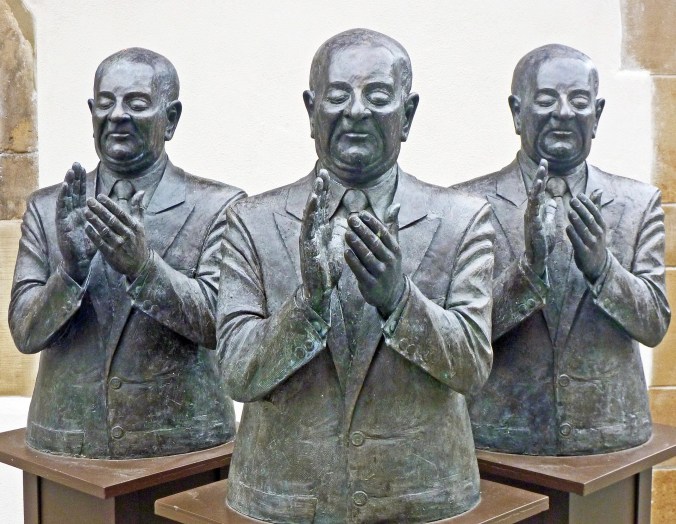
Applause

John 12:42-43 Yet at the same time many even among the leaders believed in him. But because of the Pharisees they would not confess their faith for fear they would be put out of the synagogue; for they loved praise from men more than praise from God.

Timid believers are nothing new. When we hear the accounts of Jesus’ healings, when we read how he extended a loving hand toward sinners, his kindness and gentleness can make us forget what a controversial figure he was. Several groups opposed his ministry, but no one attacked him more than the Pharisees.

At first their opposition revolved around their understanding of God’s law. The Pharisees wanted the law to start and end with external actions. Jesus insisted that the attitudes of the heart were the issue, because the law is about living a life of love. The Pharisees believed they had found the way to keep all God’s commands. Jesus’ preaching clearly showed that this is impossible. Even so-called “good” people need God’s grace as desperately as public sinners.

Eventually, the issue turned more and more to Jesus’ person. By what authority did he say the things he said? Just who did he think he was, contradicting their collective wisdom and ignoring their traditions? The way Jesus talked about the Father in heaven as his Father, the way he talked about himself, sounded more and more like blasphemy to their ears.

Jesus didn’t back off. There were literally hundreds of topics on which Jesus and the Pharisees had complete agreement. But Jesus spoke about the issues, because this is where the truth was being challenged. He took a stand where the truth of God’s word was at stake.

At the same time, those teachings filled many with fear of confessing their faith in him. Again, John says, “…because of the Pharisees they would not confess their faith for fear they would be put out of the synagogue.”

We know that fear, don’t we. Our Savior’s moral standards are becoming harder and harder to defend. Even within the church there are those who want us to embrace every deviation from God’s design for sex in the name of love and tolerance. They say it’s what Jesus would do. And it is true that Jesus holds out open arms to such people, but arms calling them to repent and turn away from their sin, not arms which ever embrace the sin itself. Jesus didn’t come to loosen up God’s commands about sexual purity. He drew the circle tighter. “Whoever looks at woman lustfully has already committed adultery with her in his heart,” are his own words from the Sermon on the Mount.

Perhaps we believe what Jesus says. But are we willing to let our Christian convictions be known? Are we afraid it wouldn’t be cool, that we’ll be labeled judgmental, that it might get us sent to “sensitivity training?” Is the faith Jesus has given us in God’s moral will a faith worth confessing?

Of all the miracles that our God has ever done for us, there is no greater gift than when he himself became a part of his own creation, and he lived and suffered and died for us as a real human being. Though we haven’t seen Jesus, he has not done less for us. These gifts are pure grace, pure expressions of God’s deep love for us. But are we embarrassed of our beliefs around those who don’t share them? And do you suppose that God can be pleased when we are ashamed even of gifts he has given?

Our weakness is not unlike that of the secret believers in Jesus’ day, “for they loved praise from men more than praise from God.” We love the praise of men. There may be people whose respect we neither seek nor desire. Around them we don’t care what we confess. But is there a family member, a friend, or a co-worker whose love or respect we treasure, with whom, we fear, a full confession of what we believe would cause a serious cooling in our relationship? We cannot maintain our faithfulness to Jesus and expect that we will always be accepted and respected.

Jesus anticipated this. So he promises blessing for those who dare to confess their faith no matter the cost: “Blessed are you when men hate you, when they exclude you and insult you and reject your name as evil because of the Son of Man. Rejoice in that day and leap for joy because great is your reward in heaven. For that is how their fathers treated the prophets” (Luke 6:22-23).

The Spirit’s Toolbox

Toolbox

1 Corinthians 2:13 “This is what we speak, not in words taught us by human wisdom, but in words taught by the Spirit, expressing spiritual truths in spiritual words.”

It ought to be obvious to all who read the Bible, or who know anything about Christianity, that the word of God is the main tool in the Holy Spirit’s tool box. How did Paul go about his work of converting people to Christianity? God did some miracles through Paul, but we don’t hear all that much about them. Paul was a generous man, but his acts of charity aren’t the focus of his missionary journeys. “This is what we speak” he says, referring to what God has freely given us. He expresses “spiritual truths in spiritual words.” Paul’s ministry was a ministry of the word.

And that fits the focus of the whole New Testament. Jesus sent his disciples to preach the Gospel to all creation. He told them to go and make disciples by baptizing and by teaching. He told his disciples that they would be his witnesses, and witnesses tell others what they have seen. Preach, teach, baptize, tell–all these require using God’s word. If the Spirit is the one who opens our hearts to believe in God’s grace, it is obvious that Jesus expected the Spirit to be present where his word was being used.

But not just any appealing words will do. Paul says that he does not use words “taught us by human wisdom.” Paul’s mission work was not slick marketing. He didn’t imitate the popular philosophies of his day or try to make the Christian message compatible with Greek science and culture. He didn’t try to help the Christian message by bringing these things in from the outside.

We need to be careful in this regard, too. We want to preach the Christian faith in such a way that we show people it is relevant to their lives. But we can go so far in trying to make things “relevant” that we end up changing the message itself. We can’t redefine the Bible’s history to fit modern science. We can’t redefine the Bible’s morals to fit the preferences of our present day. We can’t redefine the message of salvation to fit our neighbor’s “felt-needs.” We can’t redefine Biblical terminology with the language of human psychology. If we do, we will lose both the word and the Spirit who works through it.

What we need are “words taught by the Spirit, expressing spiritual truths with spiritual words.” This is a forthright claim of inspiration on Paul’s part. The words he wrote for us were not his own. The Holy Spirit taught them to him. This not only gives us confidence in their absolute truthfulness. It assures us that these words have power.

Aren’t we living proof? Whether the Holy Spirit got his first crack at our hearts in God’s word connected with our baptisms, or whether he first got in by way of the bare words of Scripture, it is the word of God with which he first opened our hearts. We can be confident that the Spirit continues to work where that word is being preached and taught and used today.

Where the Spirit’s Work Begins

dove heart

1 Corinthians 2:12 “We have not received the spirit of the world but the Spirit who is from God, that we may understand what God has freely given us.”

The “spirit of the world” Paul mentions is not a person or a being, but an attitude and outlook, especially when it comes to religion and things spiritual. In earlier verses of this chapter he had described this spirit as it showed itself among the Jews and among the Greeks of his day. The Jews who rejected Jesus would not live by faith in God. They demanded visible evidence in the form of miraculous signs. They wanted proof in power. They didn’t want a religion in which God looks like a man and even dies, in which God’s people must suffer in this world, in which the wicked would ever appear to have the upper hand, even for a while. They demanded to see God’s power and glory now.

The Greeks who rejected Jesus would not live by faith in God, either. They demanded visible evidence in the form of wisdom, a religion that fit their own ideas of what was sensible or reasonable. They didn’t want a holy God who is awesome and mysterious, who is three persons yet one God, who becomes man yet remains God, whose idea of justice is that one man would pay for the sins of everyone else, who claimed that dead bodies will be raised back to life. They demanded a more sensible god who gave them a practical religion that they could use to improve their lives right now.

This “spirit of the world” is alive and well today. People are either falsely spiritual or falsely secular. They go running after every religious charlatan who comes along claiming to perform miracles and promising that God will put them on easy street. Or they fold their arms and raise their eyebrows at every Bible teaching that goes against their own sense of what is possible or the way things work, whether it’s what the Bible promises about salvation, or what the Bible teaches about godly morals.

That spirit of the world is not one that any of us ever had to receive, because it is part of human nature. But in its place Paul, and the Corinthians, and all Christians have received “the Spirit who is from God, that we may understand what God has freely given us.” The Spirit enables us to understand God’s true gifts to us. This is so much more than an understanding of right and wrong. Many people have a pretty good idea of what that is without God’s help. But God has also freely given us his Son, his own life, forgiveness, salvation, and ultimately heaven. God grants them all to us purely out of his grace and mercy. There is no charge to us. We would not be aware of these gifts if God’s Spirit had not revealed them to us.

And understanding them is more than just knowing what the Bible says about these things. Here we are talking about conversion. The Spirit has opened our hearts so that we are no longer skeptics demanding proof. We are convinced that these things are true and we believe God’s grace all because we have received the Spirit who is from God.

This, then, is also the clearest evidence that we have the Holy Spirit working in our own hearts and lives today. The Spirit can do many other things in the life of a Christian. But the most fundamental thing the Spirit does for us, the foundation on which he builds all his other work in us, is to lead us to faith in God’s grace. Those who believe God’s grace are the real “Spirit-filled” Christians.

Rest from Your Labor

hardhat

Matthew 11:28 “Come to me, all you who are weary and burdened, and I will give you rest.”

We all value our time to rest. We know we need it. Perhaps it seems strange that someone must remind us to do it.

Americans generally have more “free” time on their hands than their ancestors. My work week looks light compared to that of my grandparents. Do we get more rest? No. Surveys suggest the vast majority of us get too little sleep. We have taken our “free” time and filled it up with so many hobbies, sports, shows, and projects that together these things almost become a second job. Sometimes I feel more tired at the end of my “day off” than I do at the end of the work day.

Today we celebrate a day to honor those who work hard and give “working class” Americans a day off. But you can be sure that on “Labor Day” the employees of your favorite store or restaurant will not only be working, they will be bracing for the extra work created by Labor Day sales or Labor Day promotions.

Perhaps it should not surprise us that God had to legislate a day off for his busy, busy people in the Old Testament. “Six days you shall labor, but on the seventh day you shall rest; even during the ploughing season and harvest you must rest.” (Exodus 34:21) The work load made no difference. People need rest whether there is much work or little. The harvest could be white in the fields, but God commanded a day off.

Perhaps it should not surprise us that God’s people didn’t always appreciate his concern for their rest. “When will the New Moon be over that we may sell grain and the Sabbath be ended that we may market wheat?” the people moaned in the days of Amos (Amos 8:5).

Of course, our loving Lord has a greater concern here than bags under our eyes. He’s not just concerned that we have a spring in our step. Those Old Testament Sabbath laws were put to rest when Jesus’ coming fulfilled them (Colossians 2:17). But God still wants us to get the true rest for our souls that Jesus provides.

“Come unto me…and I will give you rest.” We are familiar with Jesus’ promise. By faith we have experienced its truth. Nothing is more refreshing than the times when we put it all down, and he goes to work. While we lift not even a finger, he scrubs and washes us clean of the dirt and filth of sin accumulated by lives of labor in a sinful world. While we stretch and rest our tired, aching souls and consciences, he shoulders our burdens and carries our guilt.

We can find this rest not just one day a week, but every time we go to meet him in his word. Finally, the day will come when this rest is all our life. “Then I heard a voice from heaven say, ‘Write: Blessed are the dead who die in the Lord from now on.’ ‘Yes,’ says the Spirit, ‘they will rest from their labor, for their deeds will follow them’” (Revelation 14:13).

Until that final “Labor Day” let’s find our rest in Jesus’ promises.

Banquets of Blessing

Wedding Table

Luke 14:13-14 “But when you give a banquet, invite the poor, the crippled, the lame, the blind, and you will be blessed. Although they cannot repay you, you will be repaid at the resurrection of the righteous.”

Jesus gives us a representative list of the kinds of people who found it difficult to find life’s basic necessities. There were no social programs in Israel that provided so much as our government provides today. These people relied on the personal charity of others. And they would not have been in a position to pay anyone back in any way.

Lest we miss the point of Jesus’ words, let’s understand he is not saying that we have done our duty if we simply invite a few poor people over to eat once in a while. A banquet where you can’t be repaid by your guests is just one specific example of a greater principle. If God has given us more than we need–more food, more clothing, more money, more anything–he has done so, in part, so that we can help those in need. Moses commanded the Israelites to help the poor. The prophets complained about Israel’s failure to do so. John the Baptist told the man with two outfits to share with the one who has nothing. One of the first programs set up by the apostolic church after they had established the preaching and teaching of the gospel was a program to distribute food to the poor. One of the first stewardship programs we know about in the New Testament was a collection for the poor in Jerusalem.

About this time a little voice inside of us begins to object, “But I have seen some of these poor people. Some of them have drunk themselves into poverty. Some of them have no self-discipline. Some of them are just lazy.” Granted. Jesus isn’t asking us to become enablers who reinforce bad habits when we know that our charity is going to be abused. But that doesn’t negate his words. Why try to justify ourselves? Why not rather let Jesus’ words confront us and convict us of our stinginess? None of us has been so generous and charitable as we could be. Why condemn ourselves by adding self-righteousness to the mix?

In teaching us to be generous, Jesus is simply asking us to reflect the kind of charity we have received from him. We are absolute beggars spiritually. We can never repay him for leaving heaven, keeping the law in our place, dying for our sins, winning us complete forgiveness, calling us to faith, or giving us eternal life. Still he gives us all this and more as a gift of his grace. We do nothing Jesus himself has not done if we give to others knowing we can’t be repaid.

And in our charity, Jesus promises we will be blessed. What does it mean to be truly blessed, to be truly happy? It is true, people find a degree of happiness in the things this world has to offer. I am happy with my family, my home, my car, and my other things. These, too, are God’s blessings to me. Even Scripture describes them that way.

But those things don’t always turn out so happy. When they do, that happiness is often short-lived. Martin Luther once said, “Material wealth is the smallest blessing God can give to a man.” If we find our happiness in nothing more than this, the problem is not that we have wanted too much. We have settled for far too little! Jesus promises us far greater blessings when he promises, “Although they cannot repay you, you will be repaid at the resurrection of the righteous.”

Don’t read more into his words than they say. He is not saying that our acts of charity somehow paid our admission to the heavenly banquet. It’s not as though God “owed” us, and in heaven we get paid what we earned. God’s invitation is purely a gift, an act of his grace. Jesus paid our admission in full with his blood on the cross. Jesus removed the sins that barred our admission.

Jesus’ point is this: what we give the poor is a pittance compared to the treasures our Lord has waiting for us. No matter what we give here, the gifts we receive at God’s heavenly banquet will make our gifts to others look microscopic. In that sense it is the banquet where we will be “repaid” and more.

All of this is true because we will be the guests of the perfect host. This is the feast in the kingdom of God, who spares nothing to serve us, though he himself will never be repaid.

In view of such riches, we can happily give to those who need our charity.

Hearts That Need Cleaning

heart-soap

Matthew 15:17-18 “Don’t you see that whatever enters the mouth goes into the stomach and then out of the body? But the things that come out of the mouth come from the heart, and these make a man unclean.’”

A number of years ago I spent a few hours with an Islamic man talking about God and faith. I was able to steer the conversation into a talk about how to deal with our sins. The man freely admitted that he was guilty of sin. He knew that he wasn’t perfect. But he was still confident that he was on good terms with God. He wasn’t afraid. He told me, “I may be a sinner, but God knows my heart.”

God knows my heart. The Islamic man thought that this was to his advantage. But this is just the problem, isn’t it. God knows my heart. He knows what really goes on inside. In fact, he understands my own heart better than I do. He reveals it in Jeremiah, “The heart is deceitful above all things and beyond cure. Who can understand it?” (Jeremiah 17:9).

Can we do an honest investigation of our own hearts? It is easy to see why Jeremiah calls it deceitful. It is full of warm and friendly feelings toward the people who make my life more enjoyable–members of my family, friends, people I work with. Sometimes it even aches for poor and helpless people I have never met before, and I want to do something generous to help them. My heart leads me to think that I am a pretty good person for all of this. The Lord should be happy with me.

But what happens when some of those same people stand between me and what I want? What happens when I have to make the same sacrifice for them for the hundredth time? How does my heart feel when no one appreciates me for all my hard work, when no one cares and I am just someone they use to get what they want? What happens to all the warm feelings then?

Or what about all the cravings inside my heart that would hurt the people around me–cravings that could ruin a marriage, drain all the money in the family, destroy my own health, make me a burden to others if I acted on them? What does all of this say about my heart?

“Unclean” is Jesus’ evaluation. The sin that soils our souls is right inside of us. And just in case it is still hard for us to see, Jesus reminds us that we don’t keep all of that filth inside. From time to time it comes bubbling up to the surface, giving others a window to the real condition of my heart that cannot be mistaken.

Only one thing can cleanse our soiled hearts and souls. No amount of hand washing, diet change, or other traditions, new or old, have any effect. Only the blood of Jesus, his Son, purifies us from all sin. Only when our robes are washed in the blood of the Lamb do they come out white and clean. Christ who loved the church and gave himself up for her makes her holy, cleansing her by the washing with water through the word, and presenting her to himself as a radiant church, without stain, or wrinkle or any other blemish, but holy and blameless.

By forgiving our sins Jesus declares us clean—right down to the heart.

Life in Your Creator’s Image

Mirror image

Colossians 3:7-10 “You used to walk in these ways, in the life you once lived. But now you must rid yourselves of all such things as these: anger, rage, malice, slander, and filthy language from your lips. Do not lie to each other, since you have taken off your old self with its practices and have put on the new self, which his being renewed in knowledge in the image of its Creator.”

There is a difference between stumbling into a sin out of weakness and living in it as your regular, accepted practice. The difference isn’t the sin itself. That is equally wicked and dangerous in either case. The difference has to do with the heart. In one case the heart is on God’s side fighting the sin. In the other case it is opposing God by making sin a way of life and has no intention of changing.

Paul is not trying to excuse us or make light of the sins we continue to commit when he says, “You used to walk in these ways.” He’s not just trying to let us off the hook. But so long as we struggle against sin in faith, this is true. It’s not our way of life. We haven’t removed ourselves from God’s grace and forgiveness. We don’t live under God’s wrath. This urges us all the more to slay our sin, to put it to death in repentance.

Paul wants to assure us that we can do this. “Do not lie to each other, since you have taken off the old self with its practices and have put on the new self, which is being renewed in knowledge in the image of its Creator.” I want you to note a couple of things that give us the confidence we can live a new life and put to death the old. First of all, note the tense of the verbs. You have taken off the old self. You have put on the new self. That’s in the past. These are accomplished facts. You are not who you used to be. Your sinful nature died with Christ. You are someone new, a holy person God sees with him in heaven.

You have been given the power to live a different kind of life now. Someone has well said that we aren’t human doings, we are human beings. The key to living the godly life we want to live is not so much in what we do. It is in the new people God has made us to be by his grace.

Secondly, look at how that new self is described: “…being renewed in knowledge in the image of its Creator.” God is constantly working with this new you. He is making it new over and over again. In fact, this new self is the image of God himself that was lost when Adam and Eve fell into sin. You may remember that when God first made Adam and Eve, they were in the image of God. Morally and spiritually, they were little copies of God, thinking the way God thought and wanting what God wanted.

As we slay our sin in repentance, and believe the good news that God forgives us and decrees us to be his holy people, that is exactly what is happening to us. We are in the process of being made into little spiritual and moral copies of God in his image. That means we can live like people to whom God has given new life.

Baseball legend Yogi Berra had an endearing penchant for stating the obvious. Someone was once telling Yogi about a Steve McQueen movie, to which he replied, “He must have made that before he died.” That would be right. He made the movie before he died. Obviously. It’s not so obvious that the Christian life does not begin until after we have died. By faith we die with Christ to sin. By faith he raises us to a new life of love. Let’s die and rise with him each day.