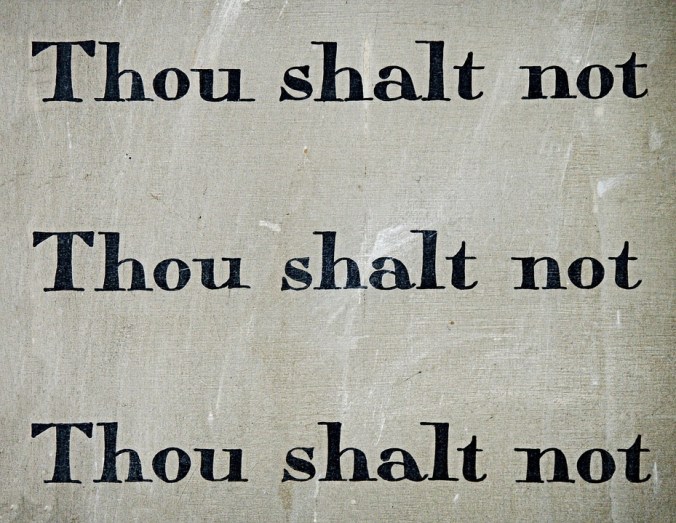
Dying to Law and Living for God

Commandments

Galatians 2:17-20 “If while we seek to be justified in Christ, it becomes evident that we ourselves are sinners, does that mean that Christ promotes sin? Absolutely not! If I rebuild what I destroyed, I prove that I am a law-breaker. For through the law I died to the law that I might live for God. I have been crucified with Christ and I no longer live, but Christ lives in me.”

If God freely forgives our sins, if he justifies us without requiring us to keep the law as a condition of saving us, doesn’t that promote sin?

The same question occurred to Paul. But just because Jesus has forgiven us and God has said we are not guilty doesn’t make them responsible if we go out and sin again. We are the ones rebuilding sin in our lives. We are the lawbreakers. In practice, forgiveness has the opposite effect upon us. It is not only the answer for sins committed. It is the answer for not committing sins. “For through the law I died to the law so that I might live for God.”

Using God’s law alone to stop committing sin is an exercise in frustration. Some Christians believe you can use it like I use my daily planner. Every day I make a list of the things I hope to accomplish and check them off as I do them. When they are all checked off, I know I have accomplished my goal.

You can’t do that with the law of God. He requires more than the external acts. When you know the Ten Commandments well, you know they are just as concerned about your attitudes and motivations as behavior. The more I know the commandments, the more ways I can see that I am falling short. My check list keeps growing longer. So does the list of personal failures I can see. The Law shows me what to do. It never gives me the power to do it.

That is why Paul can say “through the law I died to the law.” The law does do something. But that something is not giving me faith, or life, or the power to stop sinning.

The law does me the favor of showing me how useless it is to prevent me from sinning. It makes me ever more aware how much I need my Lord, not just for sins I have committed, but also to stop committing sins. Only when I have died to the law can I live for God.

You see, God justifies us by faith. That means he takes our sins, forgives them, and so declares us his perfect, not-guilty children as a gift. That impacts our future as well as resolving our past. Paul continues, “I have been crucified with Christ and I no longer live, but Christ lives in me.” I have been crucified with Christ. Jesus death on the cross is my death. When Jesus died there, God counted that death for me. My sins are gone. My Father sees me only as his holy perfect child.

But he doesn’t leave me hanging on that cross, so to speak. I no longer live, but Christ lives in me. When Jesus takes away my sins, he also puts to death my old, sinful self and makes my heart his own home. He lives his life in each one of us. Any life that Jesus is living looks exactly the way God says we are: not guilty, free from sin.

So even though we don’t have the power to do what the law says, Jesus does. When Jesus makes our own hearts his home that means more than thinking of him a lot or loving him. It means that Jesus has a genuine presence in my heart and soul. And his life gives us power to stop committing sins and live a life of love.

It isn’t dangerous for God to forgive our sins so freely. It is the only way he can make it less common in our lives.

Remember


Remember 2Deuteronomy 5:15 “Remember that you were slaves in Egypt and that the Lord your God brought you out of there with a mighty hand and an outstretched arm. Therefore the Lord your God has commanded you to observe the Sabbath day.”



Why keep the Sabbath? The children of Israel had been wandering in the wilderness for forty years when Moses reviewed the 10 commandments with them in Deuteronomy chapter 5. There were any number of events the Lord could have commanded them to remember to drive his point about Sabbath-keeping home.  He could have told them to remember how he had sent poisonous snakes to punish them when they grumbled. “So keep my command about the Sabbath now, or else.” He could have reminded them how they had made him so angry at Mt. Sinai when they worshiped the golden calf that he was ready to destroy them all. “See what happens when you mess with my worship.”

Instead, the Lord asked them to remember that they had once been slaves in Egypt. They had no rest, no relief from their work there. But the Lord delivered them.  He set them free. He gave them rest. They were helpless to do anything about their slavery in Egypt, so the Lord stepped in, drove Pharaoh to his knees, and delivered them. On the Sabbath day they could set their worries aside, and their minds could be at ease, because they remembered that they had a God who cared. A God who did this much for them must be a God who loves them, a God they could trust, a God who would take care of their needs.

That is what the Lord still wants for us with the third commandment. Which day is not important. He knows what life is like for us. He knows how often we break his laws. He knows many times others hurt us. He knows how we hurt the people we know. He understands the slavery we live in, because we sin and suffer from a sinful world. His prescription? It’s the same one it’s always been: Get plenty of rest. Off load your guilt on Jesus. Come to church and be assured that Jesus has set us free. Remember the cross. Remember that Jesus did everything to win forgiveness and heaven for us. There is nothing left for us to do. And be assured that such a God who loves us this much is with us every step of the way. He stands beside us through good times and bad, holding us up, keeping us going, moving us on. This is the rest that we find each Sunday at church, in Bible class, or in our Bibles at home.

This is the reason the words “Remember the Sabbath day” still have meaning for us. God still wants us to gather around his word, where he still gives us rest for our souls.

Every Word Is Flawless

rings

Proverbs 30:5 “Every word of God is flawless.”

There is a picture behind the promise here. If you look at the inside rim of my wedding ring, there is tiny little print that says, among other things, “14 K.” “Fourteen karat gold” means that it is fourteen parts gold and 10 parts other metals. If it were “twenty-four karat gold,” then it would be pure gold, at least as pure as is humanly possible.

Before they could add the other metals to the gold in my wedding ring, they had to get the impurities out of it. It had to be refined in order to remove the other minerals in and around it. Chemicals and super-heated furnaces were used to purify the gold.

This is the picture behind the word “flawless.” God’s word is 24 karat pure truth. There are no impurities or additives. Do you see why this is important for you to know? I haven’t read all the other “holy” books of other religions, but from what I have read I know that the Bible is particularly careful to make this claim. God was anticipating the false criticism that was going to be leveled at his word. “The Bible is just a book written by men.” In other words, it is possible that it contains mistakes and errors just like any other human book. In fact, you wouldn’t make a statement like that if you didn’t think you already had found some there.

What does that do to our trust in the promises our Lord records for us here? Now it is up to us to figure out which promises we can trust and which ones are nothing but an illusion. And what is the standard by which we will judge–our own feelings? Our own opinions? Our limited experience? The findings of science and research? Only people who are grotesquely ignorant of the history of scientific investigation can believe that so-called “science” has given us consistently accurate explanations for why things are the way they are (not that they have gotten everything wrong). But each generation has to throw out large portions of the science of the generation before it and start over with new ideas about how to explain our world.

God hasn’t put us on such shaky ground with his promises. They are 24 karat gold for certainty. There is an empty tomb in Jerusalem to prove it. There are thousands of years of prophecies fulfilled in the life, death and resurrection of Jesus to make us sure. There is the power the gospel has had on our own hearts and faith that convinces us, “These words aren’t just a collection of nice thoughts about God,” but the real history of how he has intervened in our world, the real description of who he is and what he is like. Trust his promises, and you will know that every word is golden.

Questions

Question

Proverbs 30:4 “Who has gone up to heaven and come down? Who has gathered up the wind in the hollow of his hands? Who has wrapped up the waters in his cloak? Who has established all the ends of the earth? What is his name, and what is the name of his son? Surely you know!”

If you are like most people, you keep a list. You probably don’t have it written down. You keep it in your head…or in your heart. It is the list of the things you intend to ask God when you get to heaven.

Generally speaking, that list does not speak well of our faith, because generally speaking, that list is a list of ways in which we think God got it wrong. If we were running the world, we would do things differently. And just between you and me, we think that our way would make the world a better place.

But before we ask our questions, the Lord has a few for us–questions that might help us think twice about our own list. “Who has gone up to heaven and come down? Who has gathered up the wind in the hollow of his hands? Who has wrapped up the waters in his cloak? Who has established all the ends of the earth?” People make big claims about what they have done and what they can do. Mere mortals running for president will promise that they can fix the economy and get everyone working again. Frankly, even if they were running for dictator or king I would be skeptical of such claims. The economy is bigger than one politician, or even thousands of them, it seems to me.

But controlling the economy is a far smaller thing than making a trip from earth to heaven and back, or controlling the wind and the rain, or determining the size of the earth and then building it! “What is his name, and the name of his son?” the writer asks. “Tell me if you know!” And we do. His name is God, and his Son’s name is Jesus.  The hurricanes and the storms are his playthings. The earth and the universe are a project he put together one week, and he even got it done in time to take a day off that weekend.

It puts us in our place, doesn’t it? Hundreds, thousands, and even millions of us working together can’t get control of one little feature of life on this planet God made–like the economy, or the weather. And we think we are going to lecture the one who designed and developed the vast universe in which we live, as if we think we know something. The only reason things don’t work perfectly all the time, and we aren’t all happily enjoying life in paradise, is our past meddling in God’s business. It rightly makes God furious that we stand before him with our false claims about what we have done or could do with his universe, and question him about the way he runs the show.

But this list of questions isn’t merely, or even mostly, confrontational. It is a reminder of where true help lies. It is an invitation. Fix the world’s problems? I can’t even fix my own! They are so much bigger than I am. No human source of help is any better. Then God asks us to remember his power. As Lutherans, we generally emphasize God’s grace, and rightly so, because that is the emphasis of Jesus’ ministry and that of his apostles. Above all things we need to know that God loves us, that he forgives us, that he is on our side.

But God isn’t a sympathetic weakling. When he hears our prayers, he isn’t like the counselor with lots of questions, lots of patience, and very few suggestions about what to do. He has power to change our circumstances. When he saw our sins, he didn’t pat us on the head and say, “There, there now. It will be okay.” He didn’t give us advice. He used his power to turn himself into a man, to live a perfect life, and to shoulder the responsibility for our sins. After he let himself be killed he walked out of his grave alive and glorified. He saved us. When my life is out of my control (and when isn’t it, really?), he has control of everything from the orbits of the planets and the stars in our galaxy to the orbits of the microscopic electrons in every little atom. “Remember my power,” he tells us. And in doing so he is making it clear he is the one to whom we turn for help.

Resist the Enemy

Gargoyle

1 Peter 5:8-9 “Be self-controlled and alert. Your enemy the devil prowls around like a roaring lion looking for someone to devour. Resist him, standing firm in the faith, because you know that the family of believers throughout the world is undergoing the same kind of suffering.”

Peter’s description of the devil gives us an interesting picture of what we are up against. He uses a word for “enemy” that is not the soldier someone faces in a war. This is a courtroom adversary. I don’t mean to slander the legal profession, but lawyers can be shrewd when they are on the attack in court. They know how to turn a person’s words against himself. That is the kind of craftiness we expect from the devil. If you belong to a Biblically faithful church, then perhaps he tries to make you feel self-righteous and superior. If you have had to fight attempts to change Biblical teaching in your church, he may tempt you to elevate traditions (which may be wholesome in and of themselves) to the level of doctrine. If we realize that we have been falling into a trap of self-righteousness, he may lead us to consider approving behaviors we ought not accept. If we received an upbringing in a pious, godly home with pious, godly discipline, he tries to convince us that we have been deprived in some way. We needlessly missed out on some of the fun, and we have a right to bend God’s commandments. If he can’t turn us against our pious upbringing, he turns us into moralists and legalists, people more concerned with others’ external behavior than our own hearts.

One thing is obvious. He does not have our good in mind. He wants us, he wants all of us, but he doesn’t want to play with us or help us. He wants to satisfy his own appetite for souls. He wants to devour us whole, and he never stops prowling, circling, hunting, and looking. He is never far.

This enemy deserves our sober respect. He will try to turn every trouble into a wedge between us and God. He thrills to see us in misery, because he knows the kind of strain it puts on our faith. When our life is troubled, he is looking for just the opportunity to push us over the edge.

That is why Peter encourages us to be “self-controlled and alert.” We live in a society that places a high value on emotion. The more we “feel” something, the more real it seems to us. Even Christians are tempted to equate faith with a certain emotion or “feeling.”  Sometimes it seems as if people consider it a good thing to be swept away by emotions.

When we deal with the devil, we have to place the emotions aside. Think of the bull fighter in the ring, calmly letting danger pass within inches as he plots his next move. He doesn’t run around the arena in a wild panic. When Satan stirs up trouble for us, we are tempted to panic, to lose our cool, and to do something radical or reactionary. To avoid one evil we thoughtlessly fall into something worse. But if we have gained a sober respect for the enemy, and understand his craftiness, then we will “be self-controlled and alert.”

If it were just us against the devil, there would be little hope for us. But we don’t face the enemy alone. The Lord urges us to stand firm in the faith. Our trust lies in someone else, another lion. “The Lion of the tribe of Judah…has triumphed” (Revelation 5:5). By his death on the cross and resurrection from the tomb Jesus has declawed the devil and broken his teeth. Even when the devil manages to get us to fall into temptation, he enjoys no lasting victory. By the forgiveness of our sins we slip through his paws. God’s grace picks us up, dusts us off, and strengthens our hearts against the next attack that comes our way.

Resist the enemy. Stand firm. But don’t do it alone. Stand firm in the faith, “And the God of all grace, who called you to his eternal glory in Christ, after you have suffered a little while, will himself restore you and make you strong, firm, and steadfast.”

Love Is Greatest

Summit Cross

1 Corinthians 13:13 “Now these three remain: faith, hope, and love. But the greatest of these is love.”

What is the difference that leads Paul to conclude that love is the greatest of these three? It is not that love is the only one that is eternal. Unlike gifts like prophecy and speaking in tongues, gifts which will pass away, Paul asserts that these three remain. They keep on going. They continue.

It is true that when we get to heaven we will see the evidences which support our faith with our own eyes. Faith won’t be based on promises alone. But saving faith is essentially trust in God. It’s not as though we will stop trusting God when we get to heaven. It’s just that our reasons for trusting him will be clearer.

It is also true that heaven will provide us the fulfillment of so many of the hopes to which we cling today. But that does not mean that heaven will be one everlasting monotony which leaves us without anything new to anticipate. Hope remains as God continues to unfold the glories he has prepared for us. Hope remains as the discovery of one new heavenly gift gives way to the discovery of another right behind it, and another one after that. Hope remains as we explore the inexhaustible and unbounded treasures of our eternal home. Like love, hope never fails.

In fact, we might even ask, “How can you top that? How can Paul put love at the very top of the list?” And Paul does not go into detail here. But I don’t believe the Scriptures leave us without an answer, at least in part. There is nothing our Lord wants for us more than that we should be like him. In the perfection of Eden he created us to be like him, in his image. All of world history since the fall into sin has been driven by his desire to bring us back to that state, to recreate his image in us once again. It is why he sent a Savior. It is why he died for our sins. It is why sent his gospel and called us to faith. It is why he will raise us to eternal life.

Faith and hope are tools by which God brings us to this point. They are the means to an end. By them we receive the gifts our Lord wants to give to us. Without them we have nothing.

But nothing is nearer the essence of God himself than love. “God is love,” John writes in his first epistle. To love– to be ever serving, to be ever giving–is to be like God. And to be like God would be the greatest thing of all.

Love Never Fails

Planets.jpg

1 Corinthians 13:8 “Love never fails.”

Is that true? Don’t we see love fail? I fail to love all the time. It is unbelievably difficult to resist the impulse to try to bend, twist, and shape the entire universe around me into my own little kingdom, one whose sole purpose is to serve me and make me happy. It seems as though I have been pre-programmed for this. It is a feature of original sin. It doesn’t take a genius to figure out that if my own comfort and convenience is the goal of my existence, love is going to suffer. Then people are no longer the objects of my service, the recipients of my kindness. They are little more than a means to an end. They become the objects of my lust, the targets of my greed, the enablers of my laziness, the victims of my anger, the justification for my self-pity. Do we “love” others then? Only in the sense that a famished person loves the steak dinner he is about to devour to settle his hunger. Only in the sense that demons love to control the people they possess. That is hardly the love Paul has in mind. That is sin.

All of this is not the failure of love, however. It is the failure of me. As a redeemed child of God, it is my failure to live in the love that he has shown to me. His love certainly never fails. It was love that led our Lord to leave his heavenly life of luxury and live here like us in a fallen world. It was love that led him to sacrifice food and sleep to serve the suffering souls who sought help for their sickness and disease. It was love that made Jesus the Lamb of sacrifice, who stood in our place, suffered for our sins, delivered us from death, and secured for us life that never ends. His continuing love for you and me has preserved his saving word for us. Love serves us his sacraments, and in this way sends his Spirit into our hearts, so that we believe and receive his forgiveness and know his love. Love makes this all a free and complete gift, so that any response on our part is not a self-interested attempt to purchase what he freely gives. It is truly an expression of thankful love.

So long as God’s children are receiving this grace by faith, he continues to fill them with his love, so that they may love as well. The Apostle John picked up this theme in his first letter. “Dear friends, let us love one another, for love comes from God. Everyone who loves has been born of God and knows God…. No one has ever seen God; but if we love one another, God lives in us and his love is made complete in us” (1 John 4:7,12). You and I may fail, but God never does, and neither does his love. Long after the last curtain has fallen on the story of this world, and we have lived through many scenes in the eternal story to follow, God will still love us. His love will still fill us with love for him and for each other.

Truly, then, love never fails.

Teach Your Children Well

Read

Psalm 78:”O my people, hear my teaching; listen to the words of my mouth. I will open my mouth in parables, I will utter things hidden from of old—what we have heard and known, what our fathers have told us. We will not hide them from our children; we will tell the next generation the praiseworthy deeds of the Lord…”

The psalmist says he is teaching parables, things that are hidden. You remember that Jesus often spoke in parables. For believers, they illustrated and explained what God and his work were like.  Unbelievers were left in the dark. To them, Jesus was only speaking in riddles. To them, the truth about God was hidden.

The problem was not with God, or his word, or the way that Jesus explained it. The problem was with the people. The truth about God had been available to people for thousands of years.  But people aren’t born with this information. It has to be taught to them. And people don’t naturally want to hear. They are not inclined to agree. Even when they are convinced it is true, they don’t always accept it.

Is that true of us to a degree? Sometimes we know what God’s word says. But we don’t want it to say that. Instead, as foolish as it might seem, we do things our own way, guided by our feelings or our own twisted reason. Then, after we have made a mess of the situation, and everyone is miserable, we pretend to wonder what went wrong. Even as adults we are like children who very clearly heard mom and dad say, “Don’t play with that! Don’t go in there! Don’t listen to him!” But even after getting hurt, or breaking something, we don’t want to believe it was our own fault. In that sense the psalmist can say these teachings about God are “hidden from of old.”

Still, the psalmist says, we have known these teachings. And isn’t it interesting HOW he says we have known these things? “Our fathers have told us.” There are many things my father told me. He was the one who showed me how to hold a bat and how to throw a ball. He taught me how to bait a hook, and when I got older he told me how to change the oil on my car. I suppose I have learned from him more than I even realize about how to be a husband and father and how to get along in life.

But these are not the things the psalmist means. The one thing a Christian Father has which is really worth sharing with his children is his Savior from sin. It is the word of his God.  Evangelism work is good, and mission work is good, and pastors and teachers and sermons and Bible classes are good. But from the Old Testament to the New the Lord makes it clear that he wants the next generation to hear God’s word from their own fathers. Then they, too, will have this something worth sharing with their children.

Is this the way we are doing it? As we hurry around trying to give our children all the things we never had, the education we never had, the standard of living we never had, do we forget to give them the one thing we did and do have: the message of forgiveness and eternal life in Jesus Christ? Do our own lives and priorities speak louder than our words, and do they betray that the Lord is not really first in our lives, either? Can we, do we, communicate to our children why God’s word and attending church are so important to us?

“We will not hide them from our children,” the psalm writer asserts. But there is more than one way to hide them from our children. Rarely have Christian parents tried to hide their Bibles from their children. They don’t whisper about Jesus behind their children’s backs. More often these saving truths have been buried under an avalanche of material wealth or lost in a sea of secular and social activity. Each of us can now say the grace of God that saves us is something we have known. May we not forget that it is also something worth sharing with our children.

Rising Higher by Going Lower

step down

James 4:7-8 “Submit yourselves, then, to God. Resist the devil, and he will flee from you. Come near to God and he will come near to you.”

The people in the congregations to whom James was writing felt a need to protect their own interests. But their way of going about getting it wasn’t working. The fought and quarreled among each other to get their own way. They were filled with envy for the things that others had, things they couldn’t have themselves. They may have thought they were looking out for themselves, but all their fighting and coveting accomplished was to make them feel miserable.  James had a different solution: “Submit yourselves, then, to God.”

James was telling them that in order to go up, they needed to go down. Real joy and peace would return when they stopped pushing themselves forward. Real joy and peace would return when they got their priorities straight and put themselves, their lives, and their desires, in line behind the Lord. They needed a humble approach to God.

This is what “submit” means when it is used in the Bible. Take your place in line behind someone else. Let someone else be first. It’s not an idea that enjoys much favor today. Every special interest group feels it needs to defend its territory and grab for more, whether democrats or republicans, conservatives or liberals, blacks or whites, males or females, labor or management, employees or ownership, one percenters or chronically poor. People in general view submitting as only a sign of weakness and inferiority. This very old, very Christian, very noble idea of putting others before yourself, of living a life of service, sometimes looks like it is disappearing even inside the Church.

But this humble approach to God, putting yourself in line behind him, getting your priorities straight and putting him first, is basic to receiving his lift for your life. To rise higher we must go lower. When we do, the Lord promises his blessing. “Resist the devil, and he will flee from you.” Submitting to God turns out to be a wonderful help with temptation. If we try to resist the devil all by ourselves, he has no reason to give in. We can’t stand up to temptation alone. Someone has wisely said of the “lift yourself up by your own bootstraps” approach: “When you try to lift yourself up by your own bootstraps, you either break the bootstraps or strain your back.” But when we are living in submission under God, then this promise is true. When we are in line behind the Lord, he is out in front. And when the Lord is out in front, fighting for us and with us, the devil is overmatched. Resist him, and he will flee.

Another blessing is having the Lord near to us. You can’t see what’s behind you very well. It’s so much easier to see what’s up ahead. When we submit to the Lord, when we get in line behind him, then we can see him near. We can realize the promise, “Come near to God, and he will come near to you.”

People who make the Lord number one in their lives want to get close to him every chance they get. They come to hear him speaking to them in his word. They sing about him and receive his own body and blood in his supper. Submitting to the Lord like this is a wonderful thing, because when we come close to him, he comes close to us. We know better and better each day God’s love in Christ, that he didn’t spare his own son, but gave him up for us all. He did it so that MY sins could be forgiven, and MY place in heaven could be sure. Then the Holy Spirit lives in our hearts by faith. Then we can live a life which is truly uplifted, confident that the Lord is near and with us and helping us every step of the way. Shortly before he died, Moses reminded the people of Israel: “What other nation is so great as to have their gods near them the way the Lord our God is near us whenever we pray to him?” God is near us, listening, answering, blessing when we are under him.

“Submit” may not be a popular idea. But there is no surer way for peace and joy to rise than to find ourselves under God.