Where Those Things Come From

Baby

Acts 17:25 “He himself gives everyone life and breath and everything else.”

To me, having four children doesn’t make for a shockingly large family. It wasn’t so long ago that such a family would have been on the low end of average. To many people, however, the number of people in our little tribe comes as quite a surprise. “Haven’t you figured out where those things come from yet?” we sometimes hear.

The answer is, “Yes we do. They come from God.”

When we hear of creation, no doubt we think first of the first chapters of Genesis. God spoke the words and new material objects, new phenomena, and new forms of life suddenly burst into existence. But God’s work of creation still has as much to do with why you and I are here today as it has to do with the origin of our world. “For you created my inmost being; you knit me together in my mother’s womb,” King David confesses in Psalm 139. “I believe that God has made me and every creature, and that he has given me my body and soul, eyes, ears, and all my members; my reason and all my faculties,” we learned to say in the Small Catechism.

In the Bible, creation is the special work of God. The Hebrew language even has a special word for creating which is used only of the creating work which the Lord does. You and I might sometimes think of imaginative ways to rearrange the “stuff” of which our world is made. We refer to people who are gifted at such rearrangements as “creative.”

But only God himself can literally make something out of nothing. Only he has the brilliance to produce something absolutely unique and original. You and I are living examples of his originality, brilliance, and power.

That God is the maker of all things, that some intelligent being is behind this wonderful and complex world of which we are a part, ought to be obvious to everyone. “For since the creation of the world God’s invisible qualities—his eternal power and divine nature—have been clearly seen, being understood from has been made,” the Apostle Paul once wrote to the Romans.

And yet, there is no way of proving God’s creating work to someone who doesn’t want to recognize it. “By faith we understand that the universe was formed at God’s command, so that what is seen was not made out of what was visible” (Hebrews 11:3). We can point out that evolutionary theory is more the product of naturalistic philosophy than scientific investigation, but those who have not come to trust Jesus or his word may still prefer to believe that they have apes in their family tree.

While others continue to believe that they are the children of chimps, however, we can revel in the reality that we are the children of God. Not only has he made us the very crown of his creation, but he has also created us a second time. He bought us with the blood of his Son. By water and the Word he not only washed away the sins of our old creation. He made us a new creation—people of faith and the Spirit. The Gospel of Jesus Christ has the power to create us all over again, answering the question, “Where do God’s children come from?”

They come from the same place our children do. They come from God.
A Bloody, Blessed Theology

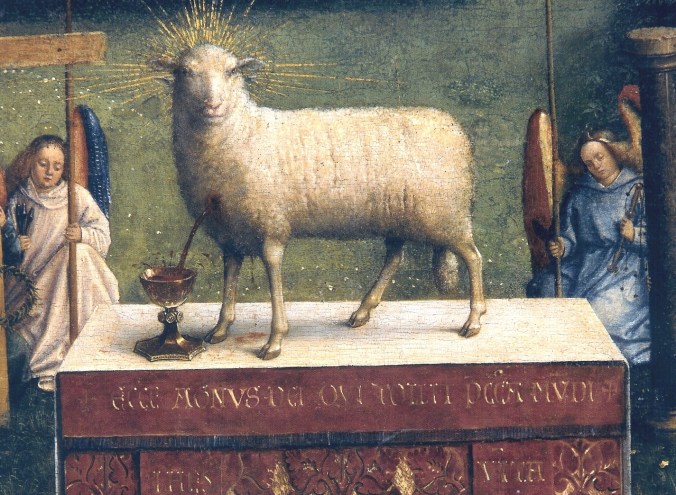
Lamb of God

1 John 1:7 “The blood of Jesus, his Son, purifies us from all sin.”

People do not all share the same expectations when they go to church.  Lutheran services have been traditionally marked by a sense of reverence and awe.  Some Bible churches have more of a breezy and laid back feel.  Among some Pentecostals the services contain uncontrollable laughter for hours.

But no one I know expects their worship to be a gory, bloody mess. Somehow bloodshed seems more “appropriate” in the latest action-adventure film than it does in Christian worship.

There was a time, however, when God’s people expected the spilling of blood to be a natural part of their worship. The temple in Jerusalem was the sight of one of the biggest, on-going slaughters of animals in history.  Little there resembled the comfortable worship environment with which we are familiar.

Worship then was just as different for the worship leader as it was for the worshiper. We expect our ministers to be well dressed and well groomed, with their hair combed, shoes shined, and shirts pressed.

The Old Testament priest had his own uniform to wear, but he wouldn’t get far into the day before his robes were dirty, sweaty, and covered with blood. To us his work might resemble that of a butcher more than that of a minister. As God’s chosen representative, he offered the sacrifices the people brought for their sins.

Why such an emphasis on blood? Why such an arrangement with the priests doing the “dirty work” of sacrifice? Both things were reminders of sin. Sin separates us from God. The fact that the priest served as a “go-between” to offer the sacrifices for the people reminded them of that separation.

Sin deserves serious punishment, and it requires a horrible price to get rid of it. The bloodshed at the temple reminded the people that “without the shedding of blood there is no forgiveness” (Hebrews 9:22).

But, as the old Lenten hymn reminds us,

Not all the blood of beasts, on Jewish altars slain,

Could give the guilty conscience peace, or wash away the stain.

Those sacrifices preached the message of sin and grace. They drew attention to the blood that must be shed for sin. They reminded people of what God must do. But the blood of animals itself did not actually pay for the sin. It pointed to the payment to come.

All those sacrifices and all those priests were symbols or “shadows” of our real high priest and our real sacrifice, Jesus Christ. When he came to God to make his sacrifice for our sins, “he did not enter by means of the blood of goats and calves; but he entered the Most Holy Place once for all by his own blood, having obtained eternal redemption” (Hebrews 9:12).

That makes Jesus the last priest we will ever need. The payment for sin is done. “Unlike the other high priests, he does not need to offer sacrifices day after day, first for his own sins and then for the sins of the people. He sacrificed for their sins once for all when he offered himself” (Hebrews 7:27).  We don’t have to keep trying to pay for it ourselves.

The separation of sin is done, too. We don’t need priests anymore. In fact, Jesus has made all believers into a “royal priesthood” (1 Peter 2:9).  For us Jesus is always the “one mediator between God and man” (1 Timothy 2:5).

Is this just dusty theology? Is this just Bible trivia? No! This means a blessed life with God! The author of Hebrews encourages us, “Since we have a great high priest over the house of God, let us draw near to God with a sincere heart in full assurance of faith” (10:21-22).

As our high priest, Jesus has made it possible for us to be close to God. Are you struggling with life? Are you lacking direction? Plagued by doubts and questions? Overwhelmed by pain? Through Jesus you and I can come close to God, and know that he will stay close to us. We can tell him our problems, and we can be sure he will be there to help.

In fact, God will never be distant again. Forgiveness means heaven. And heaven means that “the dwelling of God is with men, and he will live with them. They will be his people, and God himself will be with them and be their God. He will wipe every tear from their eyes” (Revelation 21:3-4).

A Parent’s Faithful Witness

Generations

2 Timothy 1:5 “I am reminded of your sincere faith, which first lived in your grandmother Lois and in your mother Eunice and, I am persuaded, now lives in you also.”

Take five minutes and list all the movies you have seen in the last 5 years in which wise and loving parents provided sane, intelligent direction and guidance for their children.

Is your list a short one? More often parents are portrayed as bumbling idiots with street-wise, resourceful children who know how to pull their parents’ strings and manipulate their clueless elders.

We know that, in real life, father did not always “know best.” But for most of us he was probably right more than he was wrong. Most of us are leading relatively productive, well-adjusted lives due, at least in part, to a father’s loving leadership.

Even in those families which are not so blessed with a strong father figure, God’s word is effective in guiding and shaping the lives of children when it comes from the mouth of a mother or grandmother.

That was the case for the Apostle Paul’s young friend Timothy. Timothy did not come from the ideal Christian family that could have served as a model for a 1950’s sitcom. While Timothy still had two parents at home (a blessing for children even when those parents are constantly fighting, statistics tell us) Timothy’s father was an unbeliever. In fact, Timothy’s father did not allow Timothy to be circumcised as a boy. Apparently he did not think much of the Jewish faith of his wife.

And yet, Paul tells us that from infancy Timothy had “known the Holy Scriptures which are able to make you wise for salvation through faith in Christ Jesus” (1 Timothy 3:15). When Timothy was a young man, he not only practiced the faith of Scripture, but he dedicated his life to it–first by accompanying Paul on his missionary journeys, and later by serving as pastor of his own congregation.

How did the Lord get his way with Timothy? Paul tells us that his sincere faith “first lived in your grandmother Lois and in your mother Eunice and, I am persuaded, now lives in you also” (2 Timothy 1:5). Even though the home was spiritually divided, his mother and grandmother faithfully shared God’s saving message with their boy. Timothy learned that God promised to send a Savior. Timothy knew the God who is “gracious and compassionate, slow to anger and abounding in love, forgiving wickedness, rebellion and sin.” Not only Timothy, but the entire church was served by his mother’s and grandmother’s efforts.

This is encouraging for parents today. We face many obstacles in passing our faith in Jesus along to our children. Our families are often embattled in some way or other. One parent may be absent entirely due to divorce. A believing parent may have less access to his or her children because of it. Many others in our community do not share our Christian views, and they may be more than eager to offer our children alternatives to the faith of our fathers.

But a faithful Lois or Eunice can still share the word with her little ones today, and Timothy’s example is proof of God’s promise, “My word … will not return to me empty, but will accomplish what I desire and achieve the purpose for which I sent it”(Isaiah 55:11).

All About Me?

Mirror

“Serve one another in love” (Galatians 5:13).

Have we become selfish?

Perhaps the answer seems obvious. Of course we are selfish. Selfishness is one of the core attitudes of sinfulness. And every one of us admits to being a sinner.

But that is not the point of the question. Have we become inordinately selfish? Have Christians adopted such behavior and lifestyles that they are distinguished by their selfishness?

That is a growing impression about Christians both inside and outside the church. As Christian churches more and more treat those they serve like consumers, as they try to package their product to appeal to the perceived needs of people sitting in the pew, they unwittingly reinforce the idea that life is about making myself happy. For many, if religion has any relevance, it is especially tied to how much more enjoyable it can make my earthly life.

That may not have been the intent of countless Christian classes, books, and seminars on child-rearing, marriage-building, money management, conquering bad habits, etc. But all that time put in on self-improvement means that “self” has spent a lot of time as the focus of our attention. It is hard to focus on others when we spend all our time thinking about ourselves.

Still, can it really be said that we are marked by our selfishness? The temptation is to defend ourselves. Look at all the aid Christians and their churches have given to those affected by the catastrophes around the world. Look at all the social agencies founded by Christians and supported by Christians: hospitals, shelters, food drives, nursing homes, orphanages, just to name a few.

How we compare to others in the “selfishness” category no doubt defies a definitive conclusion. But better than defending ourselves—far, far better than “improving” ourselves—is a humble attitude of repentance: a genuine acknowledgement of our selfish shortcomings, no matter how they compare, a heart-felt grief for the wrong we have done.

That turns our attention from self to the Savior. He is a need which is far more than “perceived.” There is nothing we need more than his forgiveness. And he has forgiven us by selflessly laying down his own life (not making it as enjoyable as possible) in payment for our sins.

With our eyes turned from sinful selves to selfless Savior, we see more clearly the needs of others around us. Service to our families will improve marriages, change the way we treat our children, and influence the way we handle money, to be sure. More than this, God’s grace puts us in a position to see the needs of others in our church, our community, our nation and our world. The freedom Jesus gives us in the gospel sets us free to live as servants, giving ourselves up to help the people God places in our path.

Many people believe that the old proverb, “God helps those who help themselves,” is in the Bible. It isn’t. God is especially interested in helping those who can’t help themselves. That’s the message of the Gospel. And then he is interested in helping us to help others.

Where Your Treasure Is

Map

Matthew 6:19-21 “Do not store up for yourselves treasures on earth, where moth and rust destroy, and where thieves break in and steal. But store up for yourselves treasures in heaven, where moth and rust do not destroy, and where thieves do not break in and steal. For where your treasure is, there your heart will be also.”

When I was a little boy I used to receive an allowance of 85 cents each week. I liked to save up my allowance to buy myself things. Sometimes I would save up enough to buy a Hot Wheels car or a new piece of equipment for my G.I. Joe.

When I got a little older my dad would pay me more to do bigger jobs around our yard and I saved up enough to buy a baseball glove. When I was in 7th grade I started working on my uncle’s farm and I was able to save enough to buy a small stereo system for my room.

I don’t know what has happened to my toy cars or my G.I. Joe today. They were probably thrown away when my parents moved or sold in a garage sale. My old ball glove is too small to fit me anymore. The stereo quit working years ago. All these things that I saved up to buy don’t do me any good.

Part of my allowance I wasn’t allowed to save. My parents made me put a quarter from my allowance in the offering plate on Sunday morning. Another quarter went into the Sunday School offering. At the time I didn’t think much about it, but part of that money is still around.

You see, that money went to support my congregation and the work of the church. My quarters were added to the quarters of the other children in that Sunday school, and the dollars contributed by the adults, and together they helped to pay our pastor at home and send missionaries to other places. Those pastors and missionaries preached God’s word, people learned about Jesus and came to faith, and those people will live with you and me in heaven forever.

Some of those quarters I gave on Sunday morning helped our church to send a pastor to Corpus Christi, Texas, to open Gethsemane Lutheran Church. There Pastor Leyrer shared God’s word with my wife and introduced her to the unconditional gospel of God’s grace. It is humbling to think that God used my quarters when I was a little boy to bring Jesus to my future wife. It fills my heart with even greater thanks to know that she and others I have never met will spend forever in heaven with me because people cared enough to support the work of spreading Jesus’ name.

In Matthew chapter 6 Jesus tells us, “Do not store up for yourselves treasures on earth, where moth and rust destroy, and where thieves break in and steal. But store up for yourselves treasures in heaven, where moth and rust do not destroy, and where thieves do not break in and steal. For where your treasure is, there your heart will be also.”

Like my Hot Wheels, my G.I. Joe, my ball glove, and my stereo, our earthly treasures don’t last very long. Moths eat up our clothes, and rust eats up our cars. Jesus asks us to store up our treasures in heaven. One way we can do this is by bringing our offerings before the Lord on Sunday so that he can use them to spread the Gospel to others. Those people, then, become a part of our heavenly treasure. We will have them as friends in heaven forever and ever, and nothing can take that away from us. They are a treasure which truly lasts.

Our Lord wouldn’t have to use our offerings to spread his word around the world. But because he loves us, and because that fills us with love for him, he graciously allows us to do his mission work for him. We lose nothing when we support his work at home and around a world. Our treasure is secure with him.

Which Side Are We On?

Truth

John 19:37 “Everyone on the side of truth listens to me.”

How would you complete the following sentence?

“The idea that such a thing as absolute truth exists and can be learned by people is…

  1. …an outdated belief of the past which itself is not true and only causes problems for society.”
  2. …the undeniable reality whose belief is important for the survival of Christianity and civilized society as a whole.”

If you answered “a” to the statement above, congratulations! You stand with the vast majority of Americans. In a survey already 15 years old, nearly 80% of Americans rejected the idea of absolute truth. Nearly 70% of so-called “born again” Christians reject the concept. Most of our fellow citizens have made peace with living in unending uncertainty that anything is true.

If, on the other hand, you believe Jesus when he tells us, “If you hold to my teaching, you are really my disciples. Then you will know the truth, and the truth will set you free” (John 8:31-32); “I am the way, and the truth, and the life” (John 14:6); then you know that the Christian Church is facing a big problem. Undoubtedly Jesus was referring especially to the truth about grace and forgiveness through him. That doesn’t mean he can be safely ignored on issues of right or wrong. Read the Sermon on the Mount again (Matthew 5-7) and see if Jesus doesn’t make absolute truth claims regarding moral issues.

One of the most compelling arguments against believing that absolute truth exists is the history of cruelty, even bloodshed, by those who thought they possessed it. Religious wars of various sorts–the Crusades, the Inquisition, and now the rise of fundamentalist Islamic terrorism–are all attributed to belief in absolute truth. The violent actions of some of today’s polarized political partisans, left and right, suggests that people can still become infected with this disease.

The question is: Does the problem of violence in the name of truth stem from the concept of truth itself? Or is it rather a symptom of the corruption of  mankind, one that always finds ways to twist and pervert good things for evil ends? Does the truth have to make men mean?

The absolute, non-negotiable truth that Jesus taught always centered in love. Keeping the commandments of Christianity has never been mere rule keeping. The commandments of the Bible teach us to behave in a way that serves and loves my neighbor. Caring about God and caring for others is at the heart of the absolute moral truth of our faith. This is not a sentimental niceness or socially acceptable politeness that rules out all rebuke and confrontation. But because it keeps the focus on helping my neighbor, it counteracts the heartless self-righteousness and sometimes violent condemnation that have marked so many moralists throughout the centuries.

The absolute, non-negotiable truth that Jesus taught also sets the standard of goodness far above what even the most selfless and devout people can attain. It is meant to be taken straight without any water added. When it is, it does a wonderful job of humbling even the proudest hearts. Those who are kept aware of their own sinful shortcomings are less likely to lash out at fellow strugglers in an unloving way.

Only those who know God’s absolute moral truth in this way can appreciate the truth that sets us free: in Jesus life and death both my self-indulgent immorality and my self-righteous cruelty find full and free forgiveness. That God is love, that the blood of Jesus Christ his Son cleanses us from all sin, and that this good news is the power of God for the salvation of all who believe takes on life and meaning in my heart when that heart is overcome, not by doubt, but by certainty that all of this is true.

Certainly there are things that we cannot know for certain, things God has not chosen to reveal. But where he has spoken we can be sure that there is no truth so small that it is unimportant, so insignificant that we can overlook or ignore it. Don’t be ashamed to stand up for the truth Jesus has given us. The health and future of our faith depend on it.

What Do You Want From Me?

Father-Son

Matthew 21:28-32 “What do you think? There was a man who had two sons. He went to the first and said, `Son, go and work today in the vineyard.’ `I will not,’ he answered, but later he changed his mind and went. Then the father went to the other son and said the same thing. He answered, `I will, sir,’ but he did not go. Which of the two did what his father wanted?” “The first,” they answered. Jesus said to them, “I tell you the truth, the tax collectors and the prostitutes are entering the kingdom of God ahead of you. For John came to you to show you the way of righteousness, and you did not believe him, but the tax collectors and the prostitutes did. And even after you saw this, you did not repent and believe him.”

“What do you want from me?”

Wives say it to husbands. Husbands say it to wives. Children say it to their parents. Employees may say it to their employers.

It is an expression of frustration.  “What do you want from me?” is a way of saying, “I think that I am already doing my share, and I don’t understand what your expectations are. Tell me what you expect so that I know what to do. And don’t expect more from me than I can do.”

“What do you want from me?” is also a question that imperfect human beings may ask of a holy God, and a question that Jesus answers in the parable of the two sons.

Two sons are asked by their father to do the same thing. One says he won’t, but changes his mind and goes to work. One says he will, but never does anything.

Neither of these two sons did exactly what their father wanted. Undoubtedly the father wanted them to be willing to obey him right away, to agree to go to work, and then to put their money where there mouth is–to go out and get to work.

Jesus’ parable reflects life in a less than perfect world. Sinful people resist God at first. Law and Gospel can lead them to experience a change of heart worked by God’s love and forgiveness, and to strive to serve God as a way of demonstrating such a change of heart. We call that “repentance.”

Some people say things which seem to indicate their hearts are already with God. They talk about their relationship with him all the time. The find a way to mention “Jesus” with every breath. There are so many ways in which they say they are eager to serve him.

But nothing ever gets done, and nothing ever changes. The problem is not so much with what they do (or fail to do). That is only a symptom. In spite of all their talk, their actions reveal a heart problem. They do not love God, they do not trust him, and all their worthless words are just a cover up.

All are sinners. None are perfect. No one pleases God with his own life. “Which of the two did what his father wanted?” Jesus asks concerning the two sons. Applying the parable we might ask, “What does God want from me?”

The answer is found in the example of the first son. God asks for only that which he himself gives. Repentance is his work, not ours. After his love has changed our hearts and minds, we, too, will go and work. But unless that heart has first been changed, even the “good” works we appear to be doing are no service offered to God. The problem with the lives of the Pharisees of Jesus’ day was not a lack of “religious” work. They were very busy. Their problem was that all their “service” did not truly serve the Father, because the heart from which it came did not love him.

You and I daily hear God’s call to love him and love others, and we daily say “I will not” to his commands. Harsh words, lazy indifference to the needs of others, impure thoughts, self-gratifying priorities, and our personal list of favorite sins are all ways in which we refuse to go and work in his vineyard with love. Repent. Our God is a Father who freely forgives and always loves. Believe. God’s love for us in Christ will change our hearts and change our minds. Then we will go and serve.

Uncommon Humility

Isaac

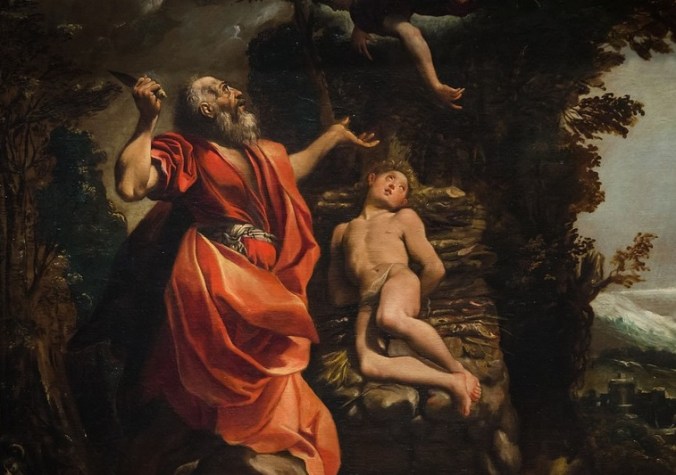
Genesis 22:9-10 “He bound his son Isaac and laid him on the altar, on top of the wood. Then he reached out his hand and took the knife to slay his son.”

Someone once said, “You can tell how much of a servant you are becoming by how you react when people treat you like one.”  Jesus reflected a similar sentiment when he said to his disciples in Luke 17, “So you also, when you have done everything you were told to do, should say, ‘We are unworthy servants; we have only done our duty.’”

That sort of thinking goes against the grain of a world obsessed with self-promotion. We attach great importance to being number one. We aspire to fame and glory. Athletes like LeBron James or Peyton Manning make more money off their fame than they do from working at the “jobs” which gave them that fame in the first place.

That’s not to say that all fame or profit from fame is evil. But our desire to stand in the limelight and receive the praise of the world often discourages us from carrying out the more humble tasks the Lord asks us to fulfill.

Look at the humble role which very nearly became Isaac’s last. In Genesis 22 we read that God asked Abraham to sacrifice his only son Isaac as a test of faith. We generally focus the great faith that made Abraham willing to obey the Lord in this account. At no point do we read of any hesitation or complaint from Abraham. He faithfully obeys God’s command and take the steps to end the life of his only son.

But what about Isaac himself? Early in the episode he had realized something was unusual about this little “retreat” he and his father were taking for worship and sacrifice. “’Father…The fire and the wood are here,’ Isaac said, ‘but where is the lamb for the burnt offering?’” (Gen. 22:7).

Yet even when the altar had been built, the wood arranged, and the time had come for Abraham to place Isaac on the altar, we hear of no struggle or complaint from young Isaac.

What humble obedience on Isaac’s part! In humility he accepted that his role in life might be simply to die so that the faith of another man might be tested and found true! In humility this young man was ready to pass up not just fame, fortune, and glory, but life’s simpler rewards of adulthood, family, and career.

With his humble submission to God’s plan, Isaac also experienced God’s deliverance. The ram the Lord substituted for the boy’s life at the end was a powerful picture of God’s grace. He is the God who spares the lives of his people by providing a substitute. The whole incident anticipates the Substitute God offered on the cross to spare the world.

Isaac’s humility demonstrates the attitude we need if we are going to follow Paul’s encouragement, “Offer your bodies as living sacrifices, holy and pleasing to God” (Romans 12:1). The self-sacrificing roles the Lord gives us to perform lack the kind of prestige and respect which attract worldly fame. Pride and self-concern are our enemies in completing our humble tasks.

Our Savior was himself a man of humility and self-sacrifice. We find forgiveness for our pride, and the faith which makes us humble, in knowing that he did not consider equality with God something he had to hold on to, but “he humbled himself and became obedient to death–even death on a cross!”  (Philippians 2:8).

Now let our attitude be the same.

Honor in Service

Sweeping

Isaiah 56: 6-7a “And to foreigners who bind themselves to the Lord to serve him, to love the name of the Lord, and to worship him, all who keep the Sabbath without desecrating it and who hold fast to my covenant–these I will bring to my holy mountain and give them joy in my house of prayer.”

Serving the Lord of heaven and earth isn’t dull, boring drudgery.  It isn’t the everyday, go-through-the-motions work of someone who simply wants to make a living or get the job done.  Isaiah’s words suggest several reasons why this is true.

First, the word translated “serve” doesn’t speak of any ordinary kind of service.  The task itself might not look different than work other people are doing, but this service takes on honor and privilege because of whom you are serving. I know many people who worked as cooks in a restaurant.  Many young people get their start at earning a paycheck by flipping hamburgers a few hours a week.  It’s usually not considered a glamorous job. I also have a relative who cooked meals for a living, but he did his cooking at the White House in Washington D.C. That job is considered very prestigious, all because of the people he served.

Janitors clean buildings all over the world. But Christians who clean their churches, clean their homes, or clean to make a living serve their Lord with this humble task. Teachers teach the “three Rs” to their students in thousands of languages in schools around the globe. But whether God’s faithful people are teaching Bible stories to their Sunday school classes, or algebra to a room full of bored teenagers, their efforts serve the One whose saving work is recorded on the sacred pages, and whose genius invented the math that orders our world. It is an honor to serve the one and only God, the Maker of all things, and the Savior of all the world, no matter the kind of activity that is involved.

A second special feature of this service is the force behind it.  Isaiah speaks of “foreigners who bind themselves to the Lord to serve him, to love the name of the Lord, and to worship him.” For believers, service to God is a labor of love.  What else could it be when we know how he first served and loved us?  Professor Siegbert Becker once wrote, “It is impossible to see ourselves as sinners deserving eternal damnation in hell and then to come to the conviction that the suffering and dying Christ has procured full and free forgiveness for us by taking our guilt upon himself and by giving his own righteousness to us as a free gift of his love, it is impossible to come to that conviction without coming to love him who gave himself into death that we might have everlasting life….To know him is to love him is more applicable to our Savior than to anyone else.” Love for the Lord who loves us sets a believer’s work and service apart.

To the prophet Isaiah’s original audience, perhaps the most shocking thing about the service mentioned was the people performing it. They were “foreigners,” Gentiles, non-Jews. These were not members of God’s chosen nation.

But they were people the Lord had chosen nonetheless. It turns out that good news about a God who dies to rescue lost souls, forgives sins, and gives his gifts for free works on human hearts regardless of race, culture, or nationality. It worked on our hearts, too. We have been given a place in God’s “house of prayer.”

May we find joy in serving him there.