If Only We Believed

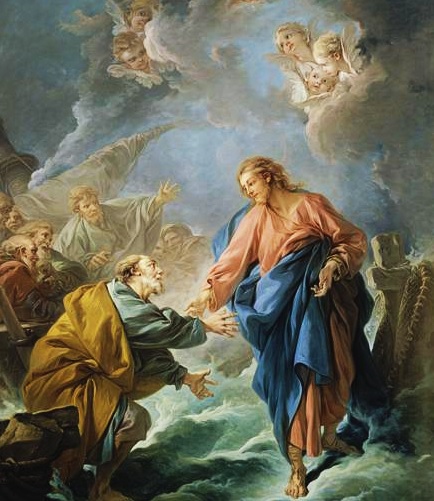
walk-on-water

Genesis 15:6 “Abraham believed the Lord, and the Lord credited it to him as righteousness”

If you were asked what our world’s number one problem is, what would you answer? The destruction and pollution of our environment? The aggression of evil dictators? The brooding nationalistic hatreds we see in places like the Middle East?

What’s the most serious concern for our nation today? The ballooning problem of political scandals? Racial division and disunity? The ever-unraveling fabric of our moral values?

What is the biggest danger facing our church? The lure of worldly pleasures? Lack of interest in spreading the good news?

Might I suggest one common problem that, more than anything else, endangers our world, our nation, and our church?

Lack of trust in God.

For as much as people talk about “faith” today, very little of it seems to be demonstrated. Our nation even prints “In God we trust” on our money. But in order to be useful, it has to be more than a slogan. It has to be, as Luther once defined it, “A living, daring confidence in God’s grace, so sure and certain that the believer would stake his life on it a thousand times.”

Let’s not be mistaken. The main purpose of faith is not to solve all our world’s, our nation’s, or even our church’s problems. Faith deals first and foremost with an immensely bigger problem–my personal sin.

For sin separates us from God (Isaiah 59:2), and the wages of sin is death (Romans 6:23). It invites God’s wrath upon us (Romans 1:18) and makes us God’s enemies (Romans 8:7).

Faith, on the other hand, is God’s tool to establish a different relationship with us. It is by faith that God makes the life that Jesus lived for us, and the death that Jesus died for us, our own life and our own death.

That is why, even before Jesus lived and died, the Lord could say of Abraham, “Abraham believed the Lord, and the Lord credited it to him as righteousness”.  When God’s promises awakened faith in Abraham’s heart, God established a new relationship with Abraham. He counted sinful Abraham as a righteous man by viewing Abraham as though Abraham were really his own perfect descendant, Jesus Christ. By faith we still enjoy the same gift of God nearly 4000 years later.

Once faith has changed our relationship with God, it changes our relationship with everyone else as well. Luther said, “Because of it (faith), without compulsion, a person is ready and glad to do good to everyone, to suffer everything, out of love and praise to God who has shown him this grace.”

Abraham’s life revealed this, too. Because Abraham trusted God, he pleaded with God to spare Sodom and Gomorrah, he went to great lengths to get a godly wife for his son Isaac, and he was even willing to sacrifice his son Isaac if the Lord called on him to do so.

Think of how different life would be in a world where everyone so trusted God.  If people really trusted God’s warnings against greed, and hatred, and lust–if they really trusted God’s promises to forgive, and to provide, and to bless–wouldn’t our world, national, and church problems evaporate as a result of such changed lives?

Faith is not the product of the United Nations.  There are no government agencies involved in its production. God hasn’t given them this responsibility, either. Faith is the work of the Holy Spirit, the result of preaching God’s word, and that is the business of the Church. Hear his word, and let him do his work.

Still Good News

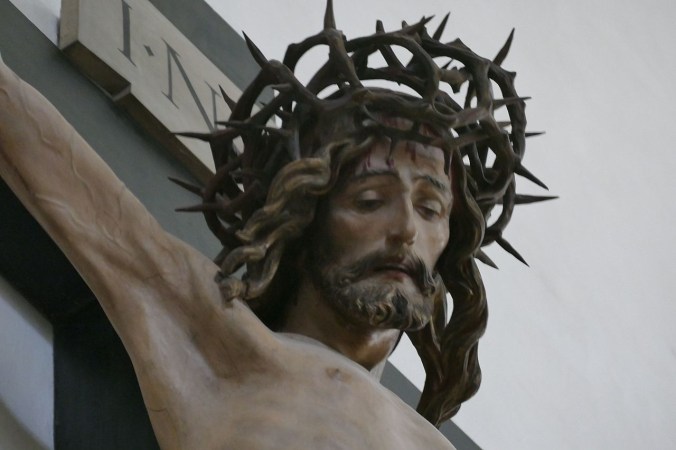
crucifix

Matthew 20:18-19

“We are going up to Jerusalem, and the Son of Man will be betrayed to the chief priests and the teachers of the law.  They will condemn him to death, and will turn him over to the Gentiles to be mocked and flogged and crucified. On the third day he will be raised to life!”

When taking my son to school in August, I got a chance to do something I don’t get to do very much anymore.  Just like you, I got to sit and listen to a sermon on Sunday morning.  As I sat and listened to the preacher talk very simply about Jesus and forgiveness, I was struck by how good those words are to hear.  The part that most struck me was not filled with fancy oratory or captivating illustrations.  It was just the simple gospel message.  We hear it so often that sometimes it’s hard for us to hear.

I think the same thing can be true of the events from Jesus’ life that won us that forgiveness.  Most of us have had the facts behind Jesus’ suffering and death for our sins drummed into us from the time we could first talk.  But it is still good for us to follow Jesus on his path to the cross and consider the love behind his suffering for us.

Thus Jesus tells us and his disciples that he was going to be betrayed to the chief priests and condemned.  He knew all about it before it even happened, but he didn’t try to stop it.  Jesus wasn’t forced to do what he did.  His love for you and me led him to offer himself willingly.

Jesus knew that mocking and flogging and crucifixion were waiting for him in Jerusalem.  Those chief priests who had been offering sacrifices for the people for thousands of years now made Jesus the final sacrifice for sin by nailing him to a cross.  But not out of love for God, and not before they humiliated him, and tortured him, and found the cruelest way possible to kill him.  Even all this suffering did not compare to the load of sin Jesus carried for all people as he was crucified.  Yet all the way to Jerusalem, Jesus knew.  He knew that his path to greatness was through suffering.  He willingly took our place because he loved us. Nothing mattered to him more than freeing us from sin and death. This path is not one that we can follow and imitate.  This path is one that we can only follow and appreciate.

The gospel is good news. Take a moment and just listen. It is still that good.

Picture By Amrei-Marie - Own work, CC BY-SA 4.0, https://commons.wikimedia.org/
w/index.php?curid=50804475

Fan the Flames

fire

2 Timothy 1:6-7 “For this reason I remind you to fan into flame the gift of God, which is in you through the laying on of my hands. For God did not give us a spirit of timidity, but a spirit of power, of love and of self-discipline.”

Sometimes God’s people are like wet wood. If you try to light a fire there, you have to tend it constantly. The process of fanning faith into action never stops. You are constantly throwing a little more kindling in to keep things from going out. That wears thin after a while.

Don’t give up. Paul reminded Timothy to “fan into flame the gift of God, which is in you through the laying on of my hands.” Like everyone else, I like to be comfortable. As a pastor, it’s easy to smolder along in ministry and do the minimum to just keep things running. Generally speaking, evangelism prospects don’t complain if I don’t visit them, straying sheep don’t complain if I don’t visit them, my faithful members don’t complain about the new Bible class I don’t start, the community doesn’t complain about the new outreach ministry that never happens, and it takes me less time and less sweat to let these things go. That kind of unfaithfulness with the gifts God has given should make us feel uncomfortable with our neglect, but the voice of God’s complaints about our sin often don’t get our attention in the same way as the person standing in front of us.

The first thing we need when that flame is burning low is the warmth and energy of the big gift of God, not the one that Paul is writing about here. “The gift of God,” as Paul tells us in Romans 6, “is eternal life in Christ Jesus, our Lord.” “By grace you have been saved, through faith–and this not from yourselves, it is the gift of God…” The gift of Jesus in his life and death; the gift of forgiveness and new life; the gift of friendship, partnership, even “family-ship” with God that we receive in the gospel, not only removes our sin. It stokes our fires and fans into flame our desire to serve him with all the gifts he has given us.

Then our Lord reminds us that he has given us gifts to serve him, just as Paul reminded Timothy here. Do you consider yourself a “gifted” person? We often reserve that description for people with exceptional abilities. Warren Buffet is a “gifted” investor. J.K. Rowling is a “gifted” writer. Carrie Underwood is a “gifted” singer. I’m not making millions and billions of dollars from my investments. No one is paying to read the things that I write, or turning them into movies. No music companies are offering me a contract. Maybe we don’t think of ourselves as being gifted. Maybe we even fear that it would be prideful to say we are.

But “There are different kinds of gifts, but the same Spirit. There are different kinds of service, but the same Lord. There are different kinds of working, but the same God works all of them in all men. Now to each one the manifestation of the Spirit is given for the common good…” Paul told the Corinthians. For service to his kingdom, for spreading the gospel, for his works of love and kindness, God has given everyone some kind of gift. Timothy had his gift, though we don’t know specifically what it was. Each of us has our gift, too. We are gifted people. The gifts don’t all look the same, just as our place and contexts don’t all look the same, but the same Spirit has given each of us the gifts we need for the work our Savior has given us to do.

Doesn’t that promise also fan the flames of faith and service? Doesn’t that promise also make us bold and eager and optimistic about the work our God has given us to do? Like Timothy, “God did not give us a spirit of timidity, but a spirit of power, of love, and of self-discipline.” Characteristics like power, and love, and self-discipline have less to do with what some would describe as “raw-talent” than they have to do with changed hearts that want what God wants. They live in hearts where God’s own Spirit is making us little Christs to the people he has sent us to serve with the gifts he has given.

We have fires to tend, and fires to light. God’s grace is the fuel that keeps the flames of faith glowing in our own hearts. His Spirit gives us all we need to help others feel the warmth of faith’s glow and kindle new fires around us.

(Picture By Petritap - Own work, CC BY-SA 3.0, https://commons.wikimedia.org/
w/index.php?curid=4604490)

Men and Women of God

timothy

I Timothy 6:11 “But you, man of God, flee from all this and pursue righteousness, godliness, faith, love, endurance, and gentleness.”

What is a prestigious title worth? If it’s “World Champion Athlete” of some sort, it may be worth millions of dollars in endorsements. If it’s “President of the United States,” it’s worth unequaled power among world leaders. If it’s “Supreme Court Justice,” it’s worth the most respected position in America. If it’s “God’s man,” it’s worth all the treasures of heaven.

That’s what Timothy was. Paul addresses him, “…you, man of God…” Timothy was a man of God. He was God’s man. The Lord had claimed him as his very own. Timothy was not just an obscure half-Jewish, half-Greek man from the city of Lystra. He was a prominent member of God’s family, someone whom the Lord himself was not embarrassed to identify with.

Timothy didn’t get that way by displaying superior talent, or winning an election, or working his way to the top. It came to him by grace. It was not the result of his long years of faithful service as an assistant missionary to Paul, and then a parish pastor. Already as a little boy his mother and grandmother told him the Bible stories and taught him the Bible promises which kindled faith in his little heart. When Jesus gave his life for the sins of the world on the cross, his blood washed away all Timothy’s sins, too. Timothy was God’s man simply because God had chosen to love him.

You and I are God’s men and women, and we are God’s people for exactly the same reason Timothy was. We are more than a group of little known accountants and pilots and salesmen and teachers and handymen and homemakers and students and doctors and dentists and cashiers and retirees. We are God’s own blood bought and blood washed people. That identity is one worth prizing. Everyone of us, from the youngest to the oldest, is a prominent member of God’s family. As members of the family we all stand to inherit and share the family fortune. As people of God we already live every day as people God treasures and cares for. The very title–man, woman, child of God–sets us apart from those who chase only riches and promises that the riches of the true God are ours!

As God’s own we “pursue righteousness, godliness, faith, love, endurance, and gentleness.” There is a whole sermon series in this list. Let’s note two things. First, we live as God’s people by  running after his commandments. We will never find the riches of heaven in our imperfect keeping of God’s commands. But we can still find gifts for our lives right now. It’s been said, “When you keep the commandments, the commandments keep you.” That’s not a promise of an earthly life free from trouble, but we avoid inviting additional trouble into our lives when do the things God asks of us.

Then, God’s people also run after those things that maintain our relationship with him, things like faith and endurance. This isn’t a “do-it-yourself” project. The Lord is ultimately the one who maintains them. But the more we hear his word, the more we receive his sacrament, the more we flee to God and find him in these gifts, the stronger our faith and the longer we will endure. This is how our Lord keeps us as God’s men, women, and children to the very end.

There is no title more worth keeping.

Night and Day

sun-and-moon

I Thessalonians 5:5 “You are all sons of the light and sons of the day. We do not belong to the night or to the darkness.”

The door to the basement of the house in which I grew up was located in a rather dark corner of our kitchen. The light switch for the basement was located inside that door above the stairs. It was an easy enough reach for an adult, but it was a bit of a stretch for a child, especially in the dark. It was responsible for any number of trips I made down the basement steps on my head instead of my feet. I can still remember the feeling of reaching for that switch in the dark, stepping forward to find it, and suddenly realizing there was nothing beneath my feet.

The problem with the dark isn’t the danger you know. It’s the danger you don’t know. It’s the danger you don’t even realize you are in because you can’t see it. Sometimes we say that people are afraid of the dark. Properly speaking, I suspect that they aren’t afraid of the dark so much as they are afraid of what’s in the dark, or what could be in the dark. Darkness leaves us with ignorance and uncertainty.

That’s a good picture of our spiritual condition without Jesus and his word. Some people move around in the darkness of unbelief. They live in an ongoing spiritual night completely unaware of the danger they are in. Maybe they feel a vague sense of fear and uncertainty. In either case they are ignorant of how little space stands between them and an eternity in hell. They are like I was as a child, walking through the doorway to our basement, reaching for the light switch, and then suddenly realizing that there was nothing but air beneath my feet.

Paul’s words to the Thessalonians are also true of us. “You are all sons of the light and sons of the day. We do not belong to the night or to the darkness.”

Even a little light makes a big difference in a dark place. That same dark basement in our old house later became my home when my father finished a bedroom for my brother and me in it. As many years as I slept there, right up until I left for high school, we had a nightlight in that room. It had about the same candle power as a single Christmas tree light. We kept it on not so much because we were afraid, but because it saved our toes on midnight trips to the bathroom. That little bit of light even served as my reading lamp back then, though my parents warned me about straining my eyes.

We who believe in Jesus aren’t struggling to make out a word or straining to see where the bedpost ends in a dimly lit basement. He has brought us out into the full light of day. By faith in his word we know. We are certain. We are confident. We know who the real Savior is. We are certain that our sins are forgiven. We are confident of where we stand with God. We know that when Jesus comes we are going to heaven. We are sons of the light and sons of the day.

By God’s grace, you and I can also open the doors, roll up the shades, and flip the switches to let the light in for others. We don’t just live in the light. It lives in us, and it shines from us. Jesus is the light of the world, but so are we he tells us in the Sermon on the Mount. The light is part of our new nature.

That light of Jesus shining through us now won’t just be a flash in the pan. Daniel promises, “Those who are wise will shine like the brightness of the heavens, and those who lead many to righteousness like the stars forever and ever.” May God keep our lights burning to light our own way as we light the way for others.

(Picture By MarSok - Own work, CC BY-SA 3.0, https://commons.wikimedia.org/
w/index.php?curid=28357992)

Only Good Gifts

snake-on-stones

Matthew 7:9-11 “Which of you, if his son asks for bread, will give him a stone? Or if he asks for a fish will give him a snake? If you, then, though you are evil, know how to give good gifts to your children, how much more will your Father in heaven give good gifts to those who ask him!”

What do we call a parent who gives his child everything he asks for? A weak parent, perhaps even a bad parent, but probably not a good parent. It can be tempting to give in to their less sensible requests just to stop the whining and begging. Maybe you have agonized a little over whether your child was old enough to safely own the jack knife or rifle he has been asking for, or whether it was a good idea to get your children the Play Station or X-Box console they wanted, as though they needed even more encouragement to sit in front of the TV. For a good parent a good gift is always something that is wholesome and beneficial, never something that is dangerous or harmful.

Jesus reminds us that our heavenly Father is a good parent. He promises that he gives us only good gifts, even if that is not immediately apparent to us.

“Which of you, if his son asks for bread, will give him a stone?” Remember Jesus’ first temptation in the wilderness? Satan tempted Jesus to turn stones into bread. But Jesus was trusting the Father in heaven to take care of his needs. If God in heaven knew that Jesus needed bread, he wouldn’t have given him worthless stones and expected him to somehow make do. If the Father had provided no food at that particular moment, Jesus had to trust that the Father knew what he was doing.

And a father certainly wouldn’t give his children something dangerous, like a snake. The danger wasn’t merely snake bite. Snakes were an unclean animal. Some Texans I’ve known have a taste for rattlesnake, but for an Old Testament Jewish person this was forbidden. Eating a snake made you ceremonially unclean and hurt your relationship with God in Jesus’ day. No loving father would purposely do that to his child.

Aren’t we sometimes suspicious that this is exactly what our Father does, however? We pray and pray about something, but it seems as if nothing happens. Worse yet, we get just the opposite of what we asked for. Instead of relief our life seems to get harder. It seems as if God is answering our prayers with the spiritual equivalents of stones and snakes.

We need to hear and trust Jesus concluding promise, “If you, then, though you are evil, know how to give good gifts to your children, how much more will your Father in heaven give good gifts to those who ask him!” In order to understand Jesus’ promise, we need to understand what he means by “good.” As is so often the case, the Greek language has several words for “good.” Here it doesn’t mean “pretty,” or “pleasant,” or “pricey,” or “just what you asked for.” Here the word refers to something which is useful or beneficial. It is actually going to help you in the long run. It’s just like when your parents used to tell you, “Take this. It’s good for you.” And you knew that meant it wasn’t pretty or pleasant, and it was almost never just what you asked for. But true to their promise, it was good for you–it did benefit you in some way or other.

Our heavenly Father answers prayer in a similar way. The only gifts he knows how to give are good gifts. Sometimes they are very enjoyable. Sometimes we get what we asked for, because we have asked for exactly what we need. But because God gives us only good gifts, he doesn’t give us things that will harm us, even when we ask for them.

Since God promises to give us only good gifts, can’t we pray to him with such confidence? We know every answer he gives to us will bless us. Sometimes people say, “Be careful what you pray for. You just might get it.” I have heard people refer to prayer as “dangerous.” And it’s true that God’s answers to our prayers can take some unexpected twists and turns. But that should not discourage our prayers. Jesus promises that everything our Father in heaven gives us is good. In his saving life, death, and resurrection, Jesus himself is the promise that everything the Father gives us is good. We can let ‘er rip, and pour out our requests non-stop, with a child’s confidence in his father’s help. No matter how our Father answers our prayers, we only stand to gain.

(Picture By Ltshears - Own work, CC BY-SA 3.0, 
https://commons.wikimedia.org/w/index.php?curid=29533674)

It’s A Miracle

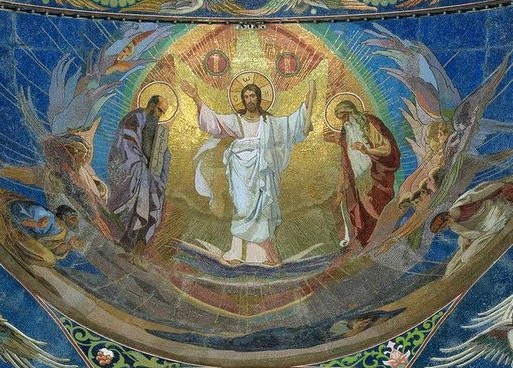
transfiguration

“And we have the word of the prophets made more certain, and you will do well to pay attention to it, as to a light shining in a dark place, until the day dawns and the morning star rises in your hearts.” (2 Peter 1:19)

Someone once asked me whether or not I believed the age of miracles was over. In the Bible, accounts of miracles tend to be bunched together around a few historical characters: Moses, Elijah, Jesus, and the Apostles. But I don’t know if there ever was an “age of miracles.” God’s power has always been at work in the lives of his people. From time to time he still works in our world in ways that can’t be explained naturally.

The miraculous is an indispensable part of Christianity. Just think about how much of the Christmas account describes things miraculous, or what would be left of it without them. But our faith does not depend on being eye witnesses of miracles. We have something better in the word. We have “the word of the prophets made more certain.” All by itself, God’s word has always been 100 percent reliable. There has never been a problem with God’s word.

But there has been a problem with me. You and I might not be like those who consider the Bible a collection of myths. We don’t dismiss miraculous events as fantasies. But we still have subtle ways of showing our lack of trust. Even Christians mistrust God’s law. The Bible clearly forbids sex outside of marriage. That didn’t prevent unmarried Christians I know from claiming they prayed to God about it, and insisting that in their case God was making an exception. Jesus equates hatred with murder. Yet many Christians try to justify hateful feelings because they believe their situation is somehow unique or exceptional. I have heard adult Christians propose that “he started it” was a valid reason to treat someone else unkindly.

Sometimes we just don’t think God’s word is sufficient for our faith, or enough to convert someone else, and we yearn for a visible demonstration of God’s power. But what does Jesus say about that sort of thing? “A wicked and adulterous generation asks for a sign.” In such ways we demonstrate our own lack of trust in God’s word.

Peter shores up our flagging faith when he promises, “We have the word of the prophets made more certain.” Is it just a coincidence that the events surrounding Jesus’ birth, and life, and death, and resurrection fulfill so many prophecies made hundreds and even thousands of years before he lived? We read the prophecies of Moses, or David, or Isaiah. We find that these are not vague generalities like your horoscope that might fit the lives of dozens of people you know. They describe exactly the specific places and events and circumstances in Jesus’ life. They demonstrate a reliability which has never failed.

It’s no wonder that Peter encourages, “…you will do well to pay attention to it, as to a light shining in a dark place, until the day dawns and the morning star rises in your hearts.” Why listen to the Word’s witness? The words of Scripture are so much more than just “God’s Little Instruction Book” or “Chicken Soup for the Soul.” A simple message like, “Jesus so loves you that he died for your every sin. Dear Child of God, your sins are all forgiven,” are filled with the miraculous power of God. When people hear them, a little miracle takes place in human hearts. A bright beacon of faith, and hope, and love begins to shine where there was only uncertainty, and despair, and loneliness before.

We don’t need to see the events of the first Christmas, or Jesus’ death and resurrection, or his shining in all his glory on the mountain (the event Peter is referencing in this context). When we listen to the Word’s witness, Jesus himself lives and shines in our hearts. By faith he is closer to us than he ever was to those who saw his physical body but never put their faith in him. His word makes me so sure that he loves me, so sure that he forgives me, so sure that now I belong just to him, that my hearts is filled with faith.

That is all the miracle we will ever need.

God’s Top Secret

https://upload.wikimedia.org/wikipedia/commons/e/e0/TopSecretFile.jpg

1 Corinthians 2:6-13 “We do, however, speak a message of wisdom among the mature, but not the wisdom of this age or of the rulers of this age, who are coming to nothing. No, we speak of God’s secret wisdom, a wisdom that has been hidden and that God destined for our glory before time began.”

The earth is flat and the moon is made of green cheese. Autumn leaves turn colors because little fairies come out at night and paint them orange and yellow while we are sleeping. Breaking a mirror will give you seven years of bad luck. If I told you that I believe all these things, you would probably think that I was making a joke. If I insisted, you might think that I had finally cracked. If everything else about me seemed normal, you might consider me a fool.

I don’t believe that the earth is flat, the moon is made of green cheese, fairies paint the leaves, or breaking mirrors negatively affects your future. But I know that some of the Bible truths we believe sound just about as strange to much of the world around us. Christian faith leads some to wonder if we have taken leave of our senses.

God’s wisdom and the world’s wisdom often part ways with each other because God’s wisdom is hidden from this age in which we now live. The difference between these two kinds of “wisdom” is not a simple matter of two alternative paths. Jesus Christ–the Way, the Truth, and the Life, the narrow door and the narrow path–is the only way to the Father and eternal life. That is God’s wisdom. The general equality of all world religions is the world’s wisdom, or worse, the generic, empty “spirituality” more and more people are adopting. These lead neither to God nor to life. To quote Paul’s words here, “they are coming to nothing.”

But they are packaged and marketed to you and me in a way that make them hard to resist. They keep wearing away at our resistance. The spin is that if you adopt the world’s wisdom, you will be more popular, you will have more fun, you must be more intelligent, you are more just or fair. If you reject the world’s wisdom in favor of God’s, you are an extremist, intolerant, someone who thinks you are better than others, or just plain ignorant. It’s a great marketing campaign, maybe the best that ever was. You feel its tug, don’t you.

In contrast, Paul’s “message of wisdom” is talking about the gospel, God’s “secret wisdom.” The Lord of glory was crucified for us. Look at the facts of Jesus’ life. If God didn’t intervene in human history, who would have known about this person named Jesus who lived and died in the obscurity of Roman occupied Israel? When Jesus was born, who would have known unless God sent angels to tell the shepherds, “Today in the city of David a Savior has been born to you. He is Christ the Lord.” When Jesus died on the cross, who really believed they were crucifying the “Lord of glory”? Even his disciples seemed to have given up on the idea. When Jesus rose again, it took the intervention of angels again to convince the women that the body was alive, not stolen. And the disciples didn’t believe until Jesus began appearing to them himself. Without God’s own intervention, this all would have remained God’s little secret.

More than these historical facts, God’s secret wisdom includes the meaning of Jesus’ life, death and resurrection. His secret wisdom is the thing God was doing for us. God entered our world as one of us, paid for all our sins by his own death, freely forgave every sin and set us free from them, made life and immortality our own as his gift. Who would have guessed that? Grace is the operative word for our relationship with God. It is our confidence of his love, our hope that we will live with him. It is not “obedience,” or “purpose,” or “effort,” or “sincerity,” or “passion.” It is grace, God’s gift-love, that has been hidden from the ages, including our own.

One commentator has noted, “No heathen people ever conceived a god who would actually take care of those who placed their reliance on him.” They live in fear, not faith. They have to work their magic and pay their dues to keep their gods happy and themselves safe. A God who freely loves them as a Father, and freely forgives? That’s our message, Paul says. That’s God’s wisdom. By giving us the gospel and leading you to faith, God has let you in on this secret.

It’s not a secret that he wants us to keep.

Jesus Has You Covered

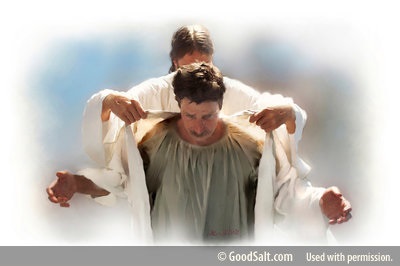
robes

Revelation 3:17-18 “You do not realize that you are wretched, pitiful, poor, blind,and naked. I counsel you to buy from me gold refined in the fire, so you can become rich; and white clothes to wear, so you can cover your shameful nakedness.”

The term “wardrobe malfunction” was coined after an unfortunate incident during the halftime show at a Superbowl about a dozen years ago. Sometimes our clothing fails us. Spiritually, we suffer from more than just a little “wardrobe malfunction.” Without Jesus, we are “naked.” It’s worse than not getting all zipped or buttoned up after a trip to the restroom. God sees right through us into all our secret thoughts and private moments. All we do or think is exposed to him.There is nothing covering our sin.

Jesus doesn’t leer at us or mock us in our nakedness. He offers “white clothes to wear, so that you can cover your shameful nakedness.” This pictures a facet of God’s saving love in the gospel that we don’t give so much attention. We tend to think first of the cross, and Jesus paying for our sins, and rightly so. But he gives us more.

Maybe someone has stolen the credit you deserved for something you did. Has anyone ever given you the credit for something good you didn’t do? Since the creation of the world there has been only one holy, spotless life of pure love and goodness, and that is the life Jesus lived during his thirty-three years with us here. Now he says, “Let’s see how that life looks on you.” He doesn’t offer us a cheap knock-off made in China; or a pattern, some material, and a sewing machine so that we can make our own. He goes to his closet, and he dresses us up in his own perfection. He covers the story of our failings, our weak moments, our meltdowns and angry outbursts, our cold-heartedness and loveless hypocrisy, with his perfect patience, his good-hearted kindness and mercy to everyone he met, his courage and integrity, his consistent honesty and his uncomplaining sacrifice. He gives us the credit for his life and his love.

“Oh look,” he says, “It’s a perfect fit! Why don’t you keep it, and whenever my Father sees you, he will say we look like twins.” Jesus’ righteousness is the last and only thing we will ever need to wear.